The Altar of Peace
Before there was an empire, before there was a republic, there were seven kings of Rome. The first was Romulus, who ruled after killing his brother Remus. The last was the Etruscan, Tarquin the Proud, who usurped his father-in-law’s crown, and then had the old man murdered. After years of war and oppressive rule, and after Tarquin’s son, Sextus Tarquinius, raped the beautiful and virtuous matron Lucretia, the Roman people decided they had had enough of kings, overthrew Tarquin, and drove him from the city. Henceforth, they said, the city would be ruled by “the Senate and People of Rome”, Senātus Populusque Rōmānus; and the Roman Republic was born.
Tarquin had owned a large, level plain stretching from the Quirinal hill to the Tiber River, and the Senate quickly appropriated the land. They called it the Campus Martius, the Field of Mars, after the Roman god of war; and here the citizen-soldiers of the new republic trained for defence of the city, and for conquest. The Republic lasted more than four and a half centuries, finally ruling the entire Mediterranean basin, until at last a corrupt Senate lost the trust of the people, leaving real power in the hands of feuding generals, each with their own legions loyal to them.
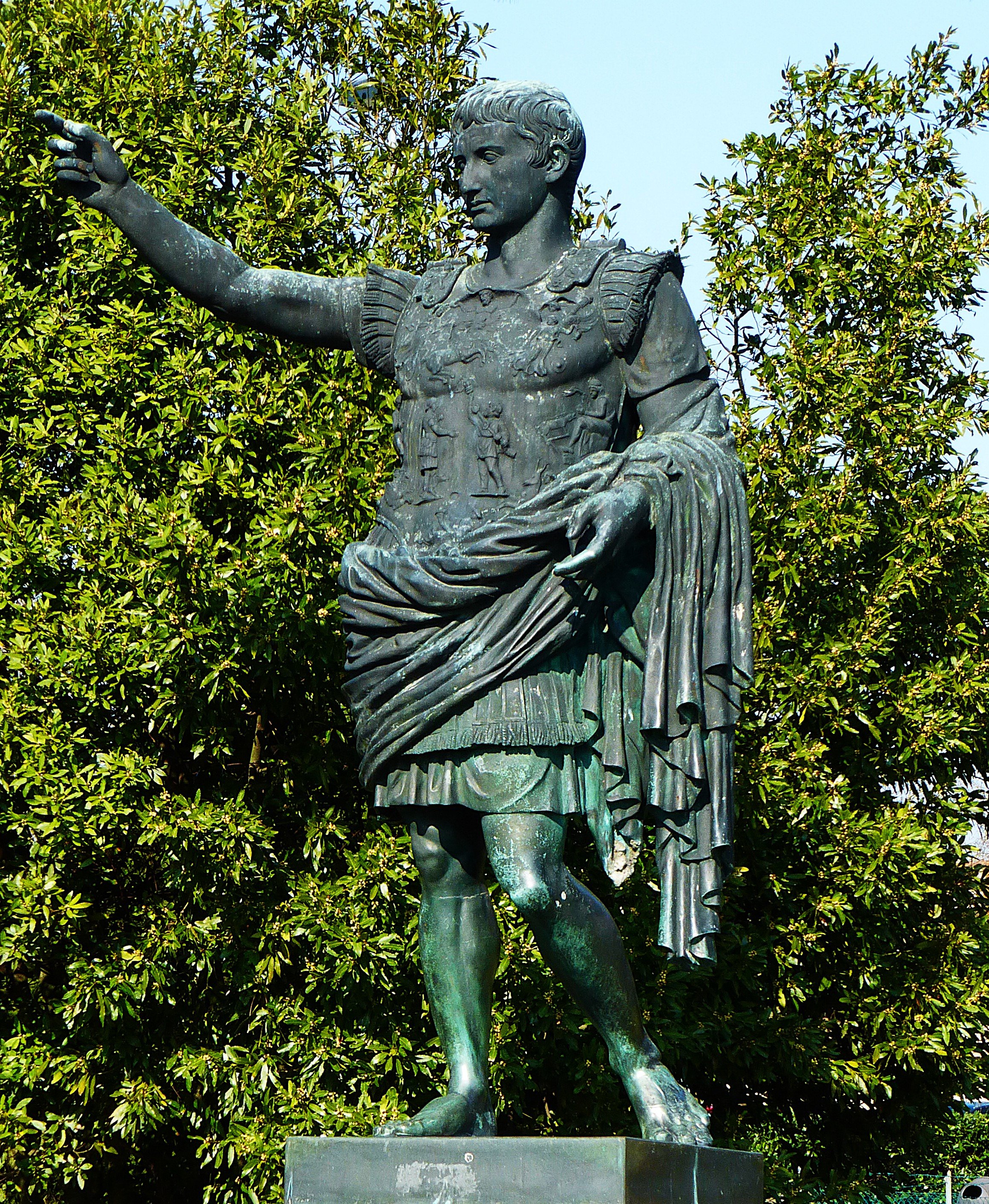
Augustus, at the height of his power
The next tumultuous years were the death struggle of the Republic: from 49 BC when Julius Caesar crossed the Rubicon to conquer Rome, 44 BC when he was assassinated, 42 BC when young Octavian avenged his death upon Brutus and Cassius at the battle of Philippi, 31 BC when Mark Antony fled the battle of Actium, to 27 BC when the Senate gave Octavian unlimited power and the honorific title Augustus.
Augustus was a brilliant leader, an administrator of genius, and aided by the pretence that he was merely the Princeps, the “first among equals”, he brought stability and relative peace (the Pax Romana, which lasted until the death of Marcus Aurelius in 180 AD), though his rule was as autocratic as any king. Most Romans, content with their comfortable lives, forgot both the freedom and the responsibility of their Republican heritage.
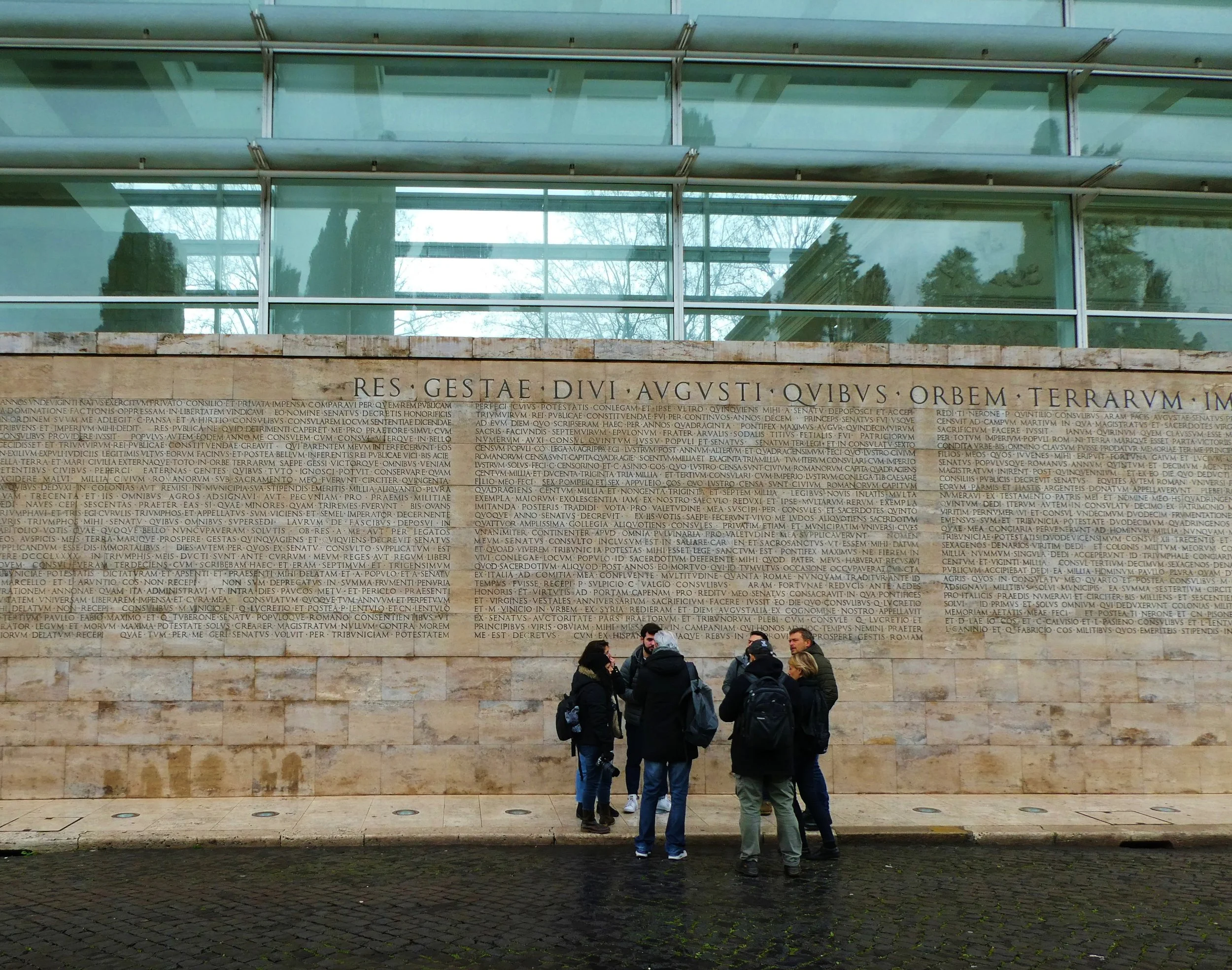
Res Gestae Divi Augusti
Augustus was a prodigious builder, and one project was an enormous mausoleum intended for him and his family: it’s in the Campus Martius, the Field of Mars, and you can still find it today by the river on Via Ripetta, just north of Ponte Cavour. Shortly before he died in 14 AD, Augustus wrote his own political autobiography, called the Res Gestae Divi Augusti, (“the Deeds of the Divine Augustus”) listing the great accomplishments of his life, including tallying all the money he’d spent keeping the Romans entertained. Inscribed on two bronze plates, it was mounted beside the doors of his mausoleum, and copies were sent out all over the empire.
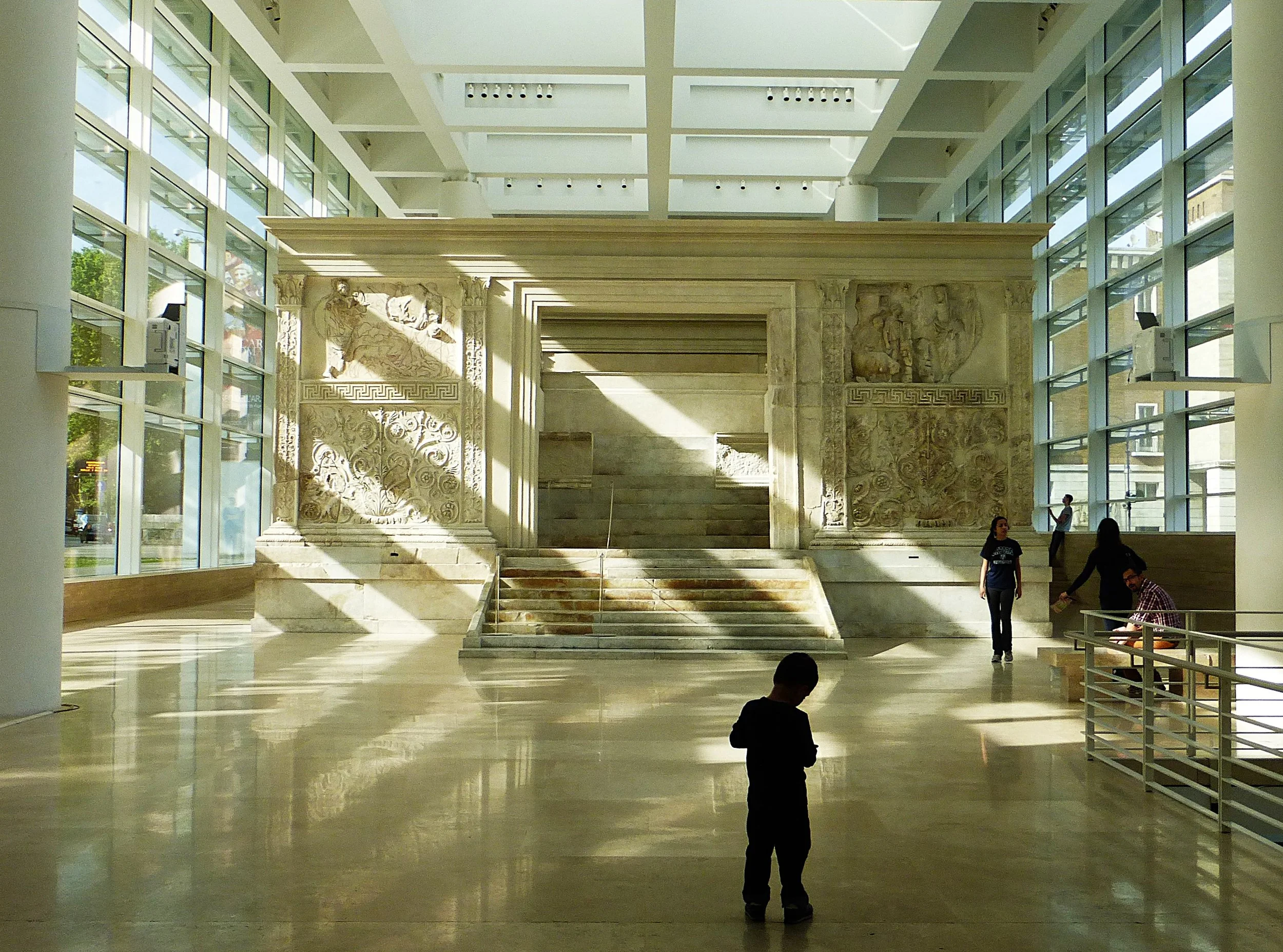
Ara Pacis Augustae, in its modern home
In 13 BC, the Senate ordered that a new monument should be built, made of pure white marble. South of the mausoleum, it was also in the Field of Mars. It honoured Pax, the Roman goddess of Peace. Ara Pacis Augustae, it was called: the Altar of Augustan peace. The actual altar was enclosed inside a rectangle of marble walls, sculptured in relief. On the outside of the walls, a row of panels on the lower half were carved with an elaborate design of curving acanthus leaves, flowers, frogs, lizards, and swans, signifying nature at peace.
The upper half of the walls depicted the Imperial family, with friends, officials and priests, in a solemn procession around the walls. Among many others, there were portraits of Augustus himself, his wife Livia, her sons Tiberius and Drusus, and Marcus Agrippa, Augustus’ friend and son-in-law. Other panels portrayed mythological scenes, such as Tellus, the Roman Mother Earth, holding two babies in her lap, symbolizing fertility and plenty.
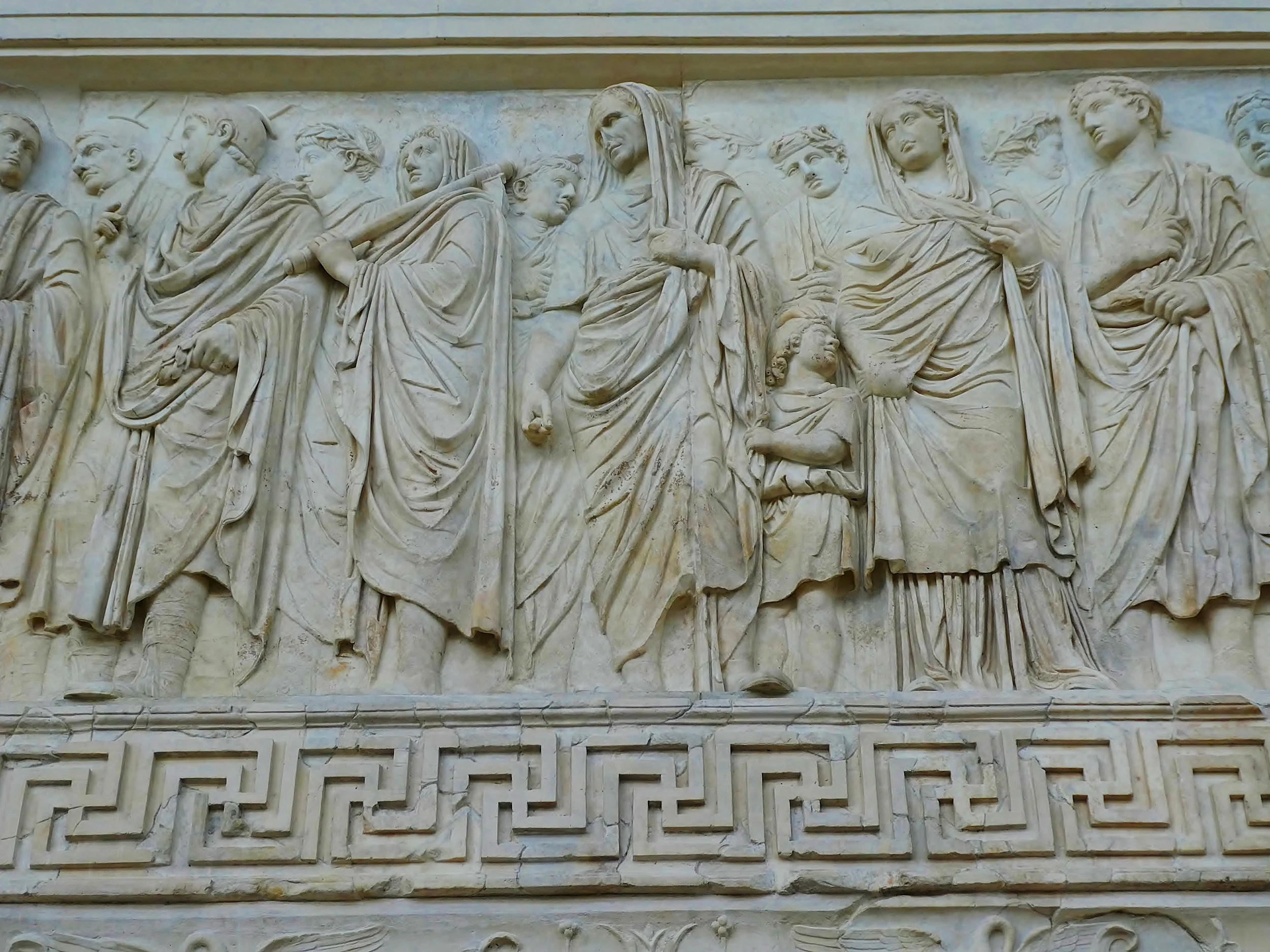
The central figure is Marcus Agrippa. To his right is his son, Gaius Caesar, and his wife (Augustus’ daughter), Julia the Elder
About this time, another curious creation appeared in the Field of Mars: a huge, travertine pavement, marked with inlaid bronze lines, with a tall Egyptian obelisk at one edge, to serve as the gnomon for a giant sundial. Every 23rd of September, Augustus’ birthday, the shadow of the obelisk fell directly on the entrance of the Ara Pacis.
After the Roman Empire fell, the Ara Pacis slowly deteriorated and fell, too, undermined by a rising water table. The great sundial crumbled and the obelisk tumbled, too. Covered by mud and debris, they were all forgotten for a thousand years. When parts of Ara Pacis were found during building excavations in 1568, no one knew what the pieces were, and they were dispersed, over the next few centuries, to various places: to Florence, to become part of the Villa Medici garden wall; to the Vatican; to the Louvre in Paris, and even to Vienna. The obelisk, by the way, was found and reassembled on the Piazza di Montecitorio, where you may see it today.
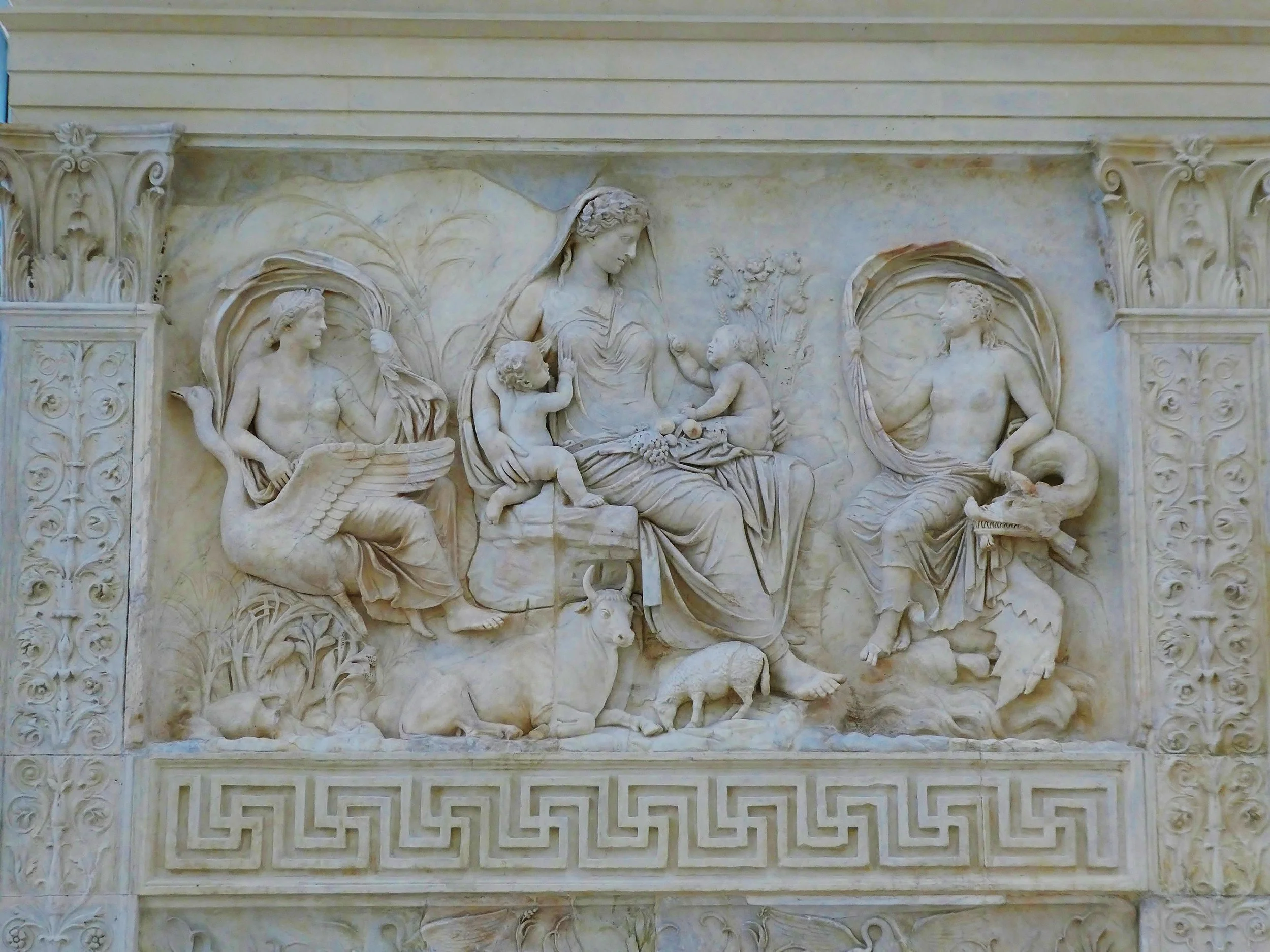
Tellus, the Roman Mother Earth, holding two children symbolizing fertility and plenty
In the 20th century, researchers identified most of the scattered pieces of Ara Pacis, and in 1938, it was partially reconstructed near the Tiber, close to Augustus’ Mausoleum. A protective structure, including a wall with the Res Gestae inscribed on it, enclosed the entire monument. Since then, most missing pieces of the monument have been recovered. In 2006, the old protective enclosure was replaced by a modernistic, glass-walled building by the architect Richard Meier, but he retained the Res Gestae wall, in memory of the first Emperor of Rome, who insisted he was merely “first among equals”.
It’s said that Augustus’ last words to Livia were “Have I played my part well?”
© Text © 2019 by Joe Gartman; Photographs © 2019 by Patricia Gartman. First published in Italia! Magazine, August 2019