The Chronicles of Narni
Our apartment is perched high on a cliff at the edge of town. Just outside our window, the swallows wheel and race in flocks of hundreds, tirelessly seeking invisible insects floating in the early summer air. Like Italy herself, they seem to represent a massive continuity: Aldous Huxley wrote of them from a tower window in Siena in 1925; they seemed, he said, to be the embodiment of speed as they swooped and turned within the length of their bodies, their thin shrieks audible counterpoints to their flight. Here in Narni, I feel a kinship with that brilliant tourist of long ago. Perhaps there’s an even older kinship. Did early morning watchmen, in the towers of other medieval hill towns, marvel at them a millennium ago?
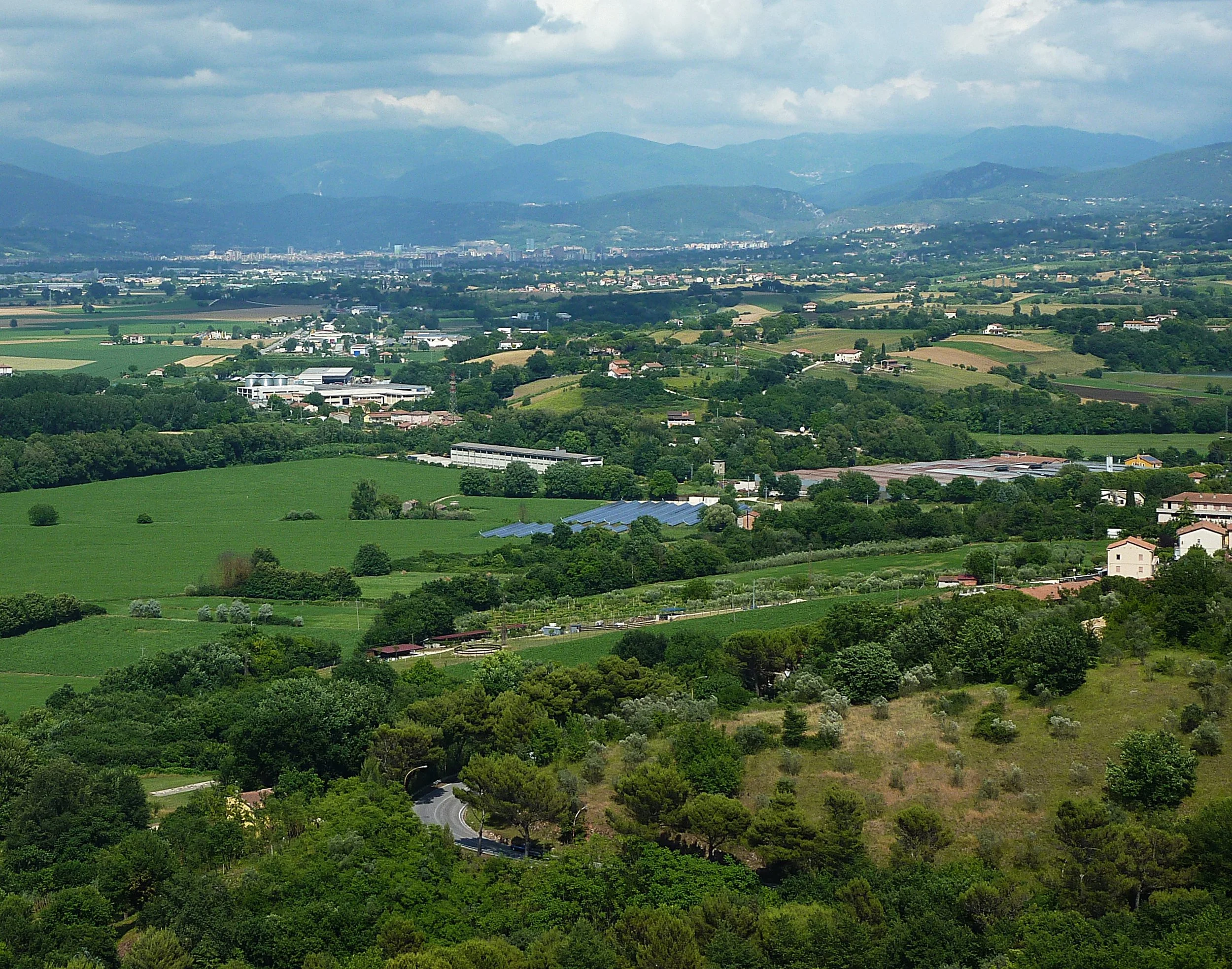
View of Umbria from our windows
We’ve come to Narni, the geographical center of Italy, as a kind of travel experiment. We want to improve our language skills in a place where we won’t encounter many English speakers, and we hope to explore other hill towns of Umbria by public transport and our own two feet. Happily we’ve found that we can do both using this small, ancient settlement as our headquarters. Although Narni has all the narrow, cobbled, arched streets, and all the breathtaking views of the green Umbrian countryside any history-addled visitor could wish, few tourists find their way here. We’ve shared a bottle of Ciliegiolo di Narni with a couple of German bicyclists on their way to Rome, and met a Dutch couple hiking the Umbrian hills, but non-Italians are still a rarity. The friendly owner of a popular pizzeria on Piazza Garibaldi has better English than our Italian, but he and his British wife are our only resources if we encounter a linguistic emergency.
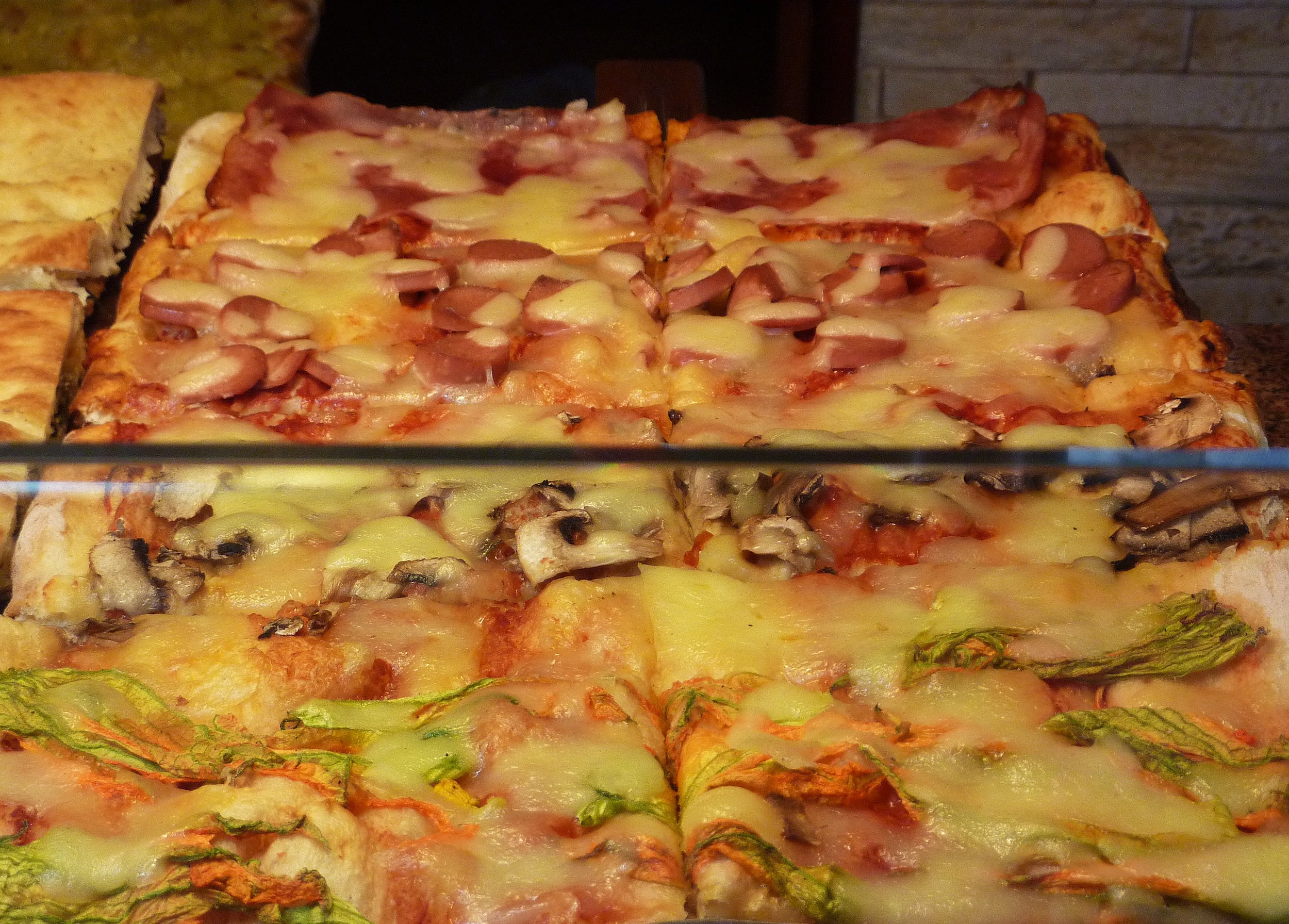
The local pizza
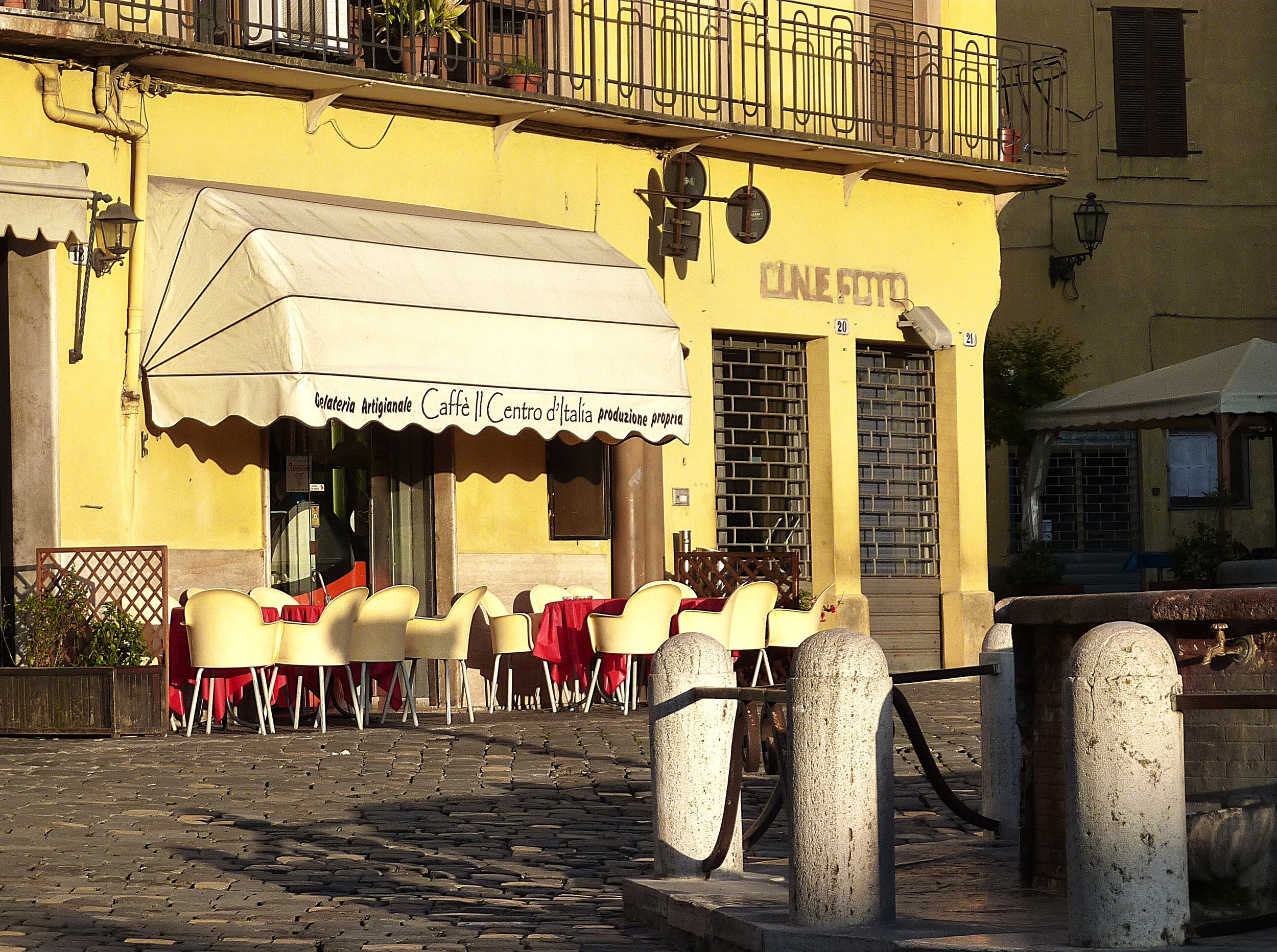
So far, so good, though. The three women who preside in turns at the bar of Caffe Centro d”Italia smilingly accommodate our peculiar preference for Caffe Americano, and feed us on pastry in the morning and splendid gelato after dinner. Every morning as we walk the fifty meters from our apartment to the piazza to begin our daily explorations, our friend Giuliano waves from behind the counter of his shoeshop. Early on he repaired a broken purse clasp gratis and told us of his relatives in the States. He was astonished to learn how far Utah is from New York.
Thanks to the cheerful patience of the dark-haired Renaissance beauty who presides over the regional bus company office, we’ve deciphered the inscrutable bus timetables. Now we travel with confidence around Umbria by bus and train. We’ve discovered a delightful walk down from hilltop Narni, through two ancient city gates, to the Stazione in Narni Scalo. On the way we like to stop in the forest beside the River Nera, where we are shaded by the enormous arch of a Roman bridge which once carried the Via Flaminia on the way from Rome to the Adriatic. It was a complete span 2000 years ago when the legions marched to the frontiers of empire.
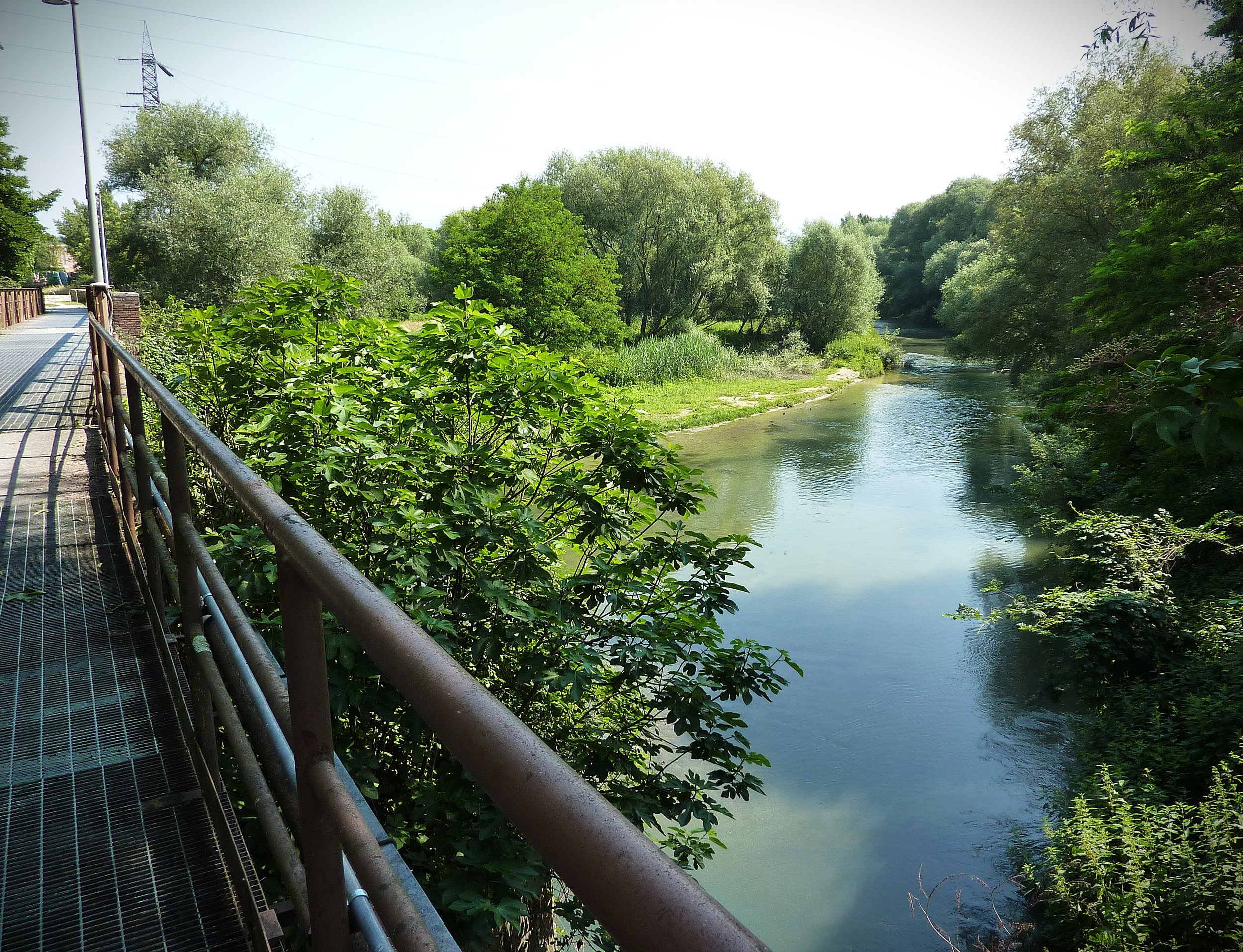
Word War II footbridge across the Nera River
Now there’s just one arch – but there’s a small footbridge across the river. We were told it was built by the US Army in WWII. I can’t confirm it, but if so, it too carried soldiers who are now among the honored dead.
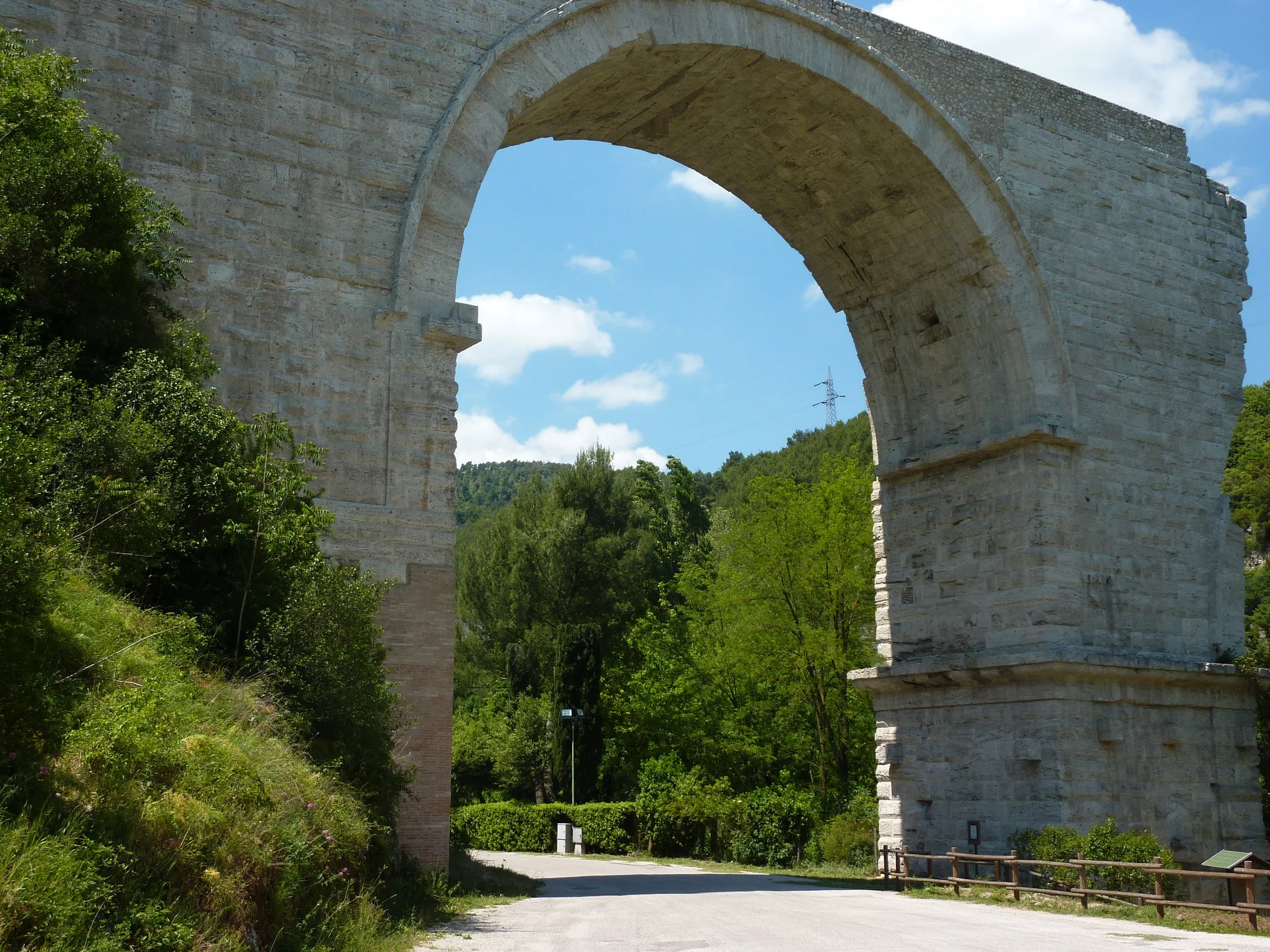
The one arch (of four) that remains of the ancient Ponte Augusto
We’re content to stay within the frontiers of Umbria (barring a couple of days in Rome, an hour or so away by train). We’ve stood in amazement beneath Luca Signorelli’s frescos in Orvieto’s spectacular cathedral and Benozzo Gozzoli’s Life of Saint Francis in Montefalco. In Orvieto we descended into the Pozzo di San Patrizio, a 200-foot well constructed in Renaissance times to supply the city with water during sieges. Antonio da Sangallo designed it with a unique double-helix staircase, allowing the donkeys who carried water up and down to travel without meeting each other.
We’ve walked the flower-bedecked streets of Spello, lunched alfresco beside the Ponte delle Torri in Spoleto, and joined holiday-making families in the mists of the Cascata delle Marmore. (This astonishing 500-foot man-made waterfall, created in 297 BC by Roman engineers to drain a malarial swamp, was formed by diverting the River Velino into the valley of the Nera River.) The park-like setting of the falls, with trails to different viewpoints and a pleasant, convenient café, make it a popular weekend escape for residents of nearby towns. Ancient Terni, probably founded in the seventh century B.C., is nearest the falls. Though old, its claim to fame is industry, beginning in the sixteenth century with ironworks. Today the town is known for steelworks and chemical plants. These made Terni a frequent target of air raids in WW II, so the rebuilt town isn’t picturesque. But it’s where the picturesque towns shop and bank and get their cars repaired.
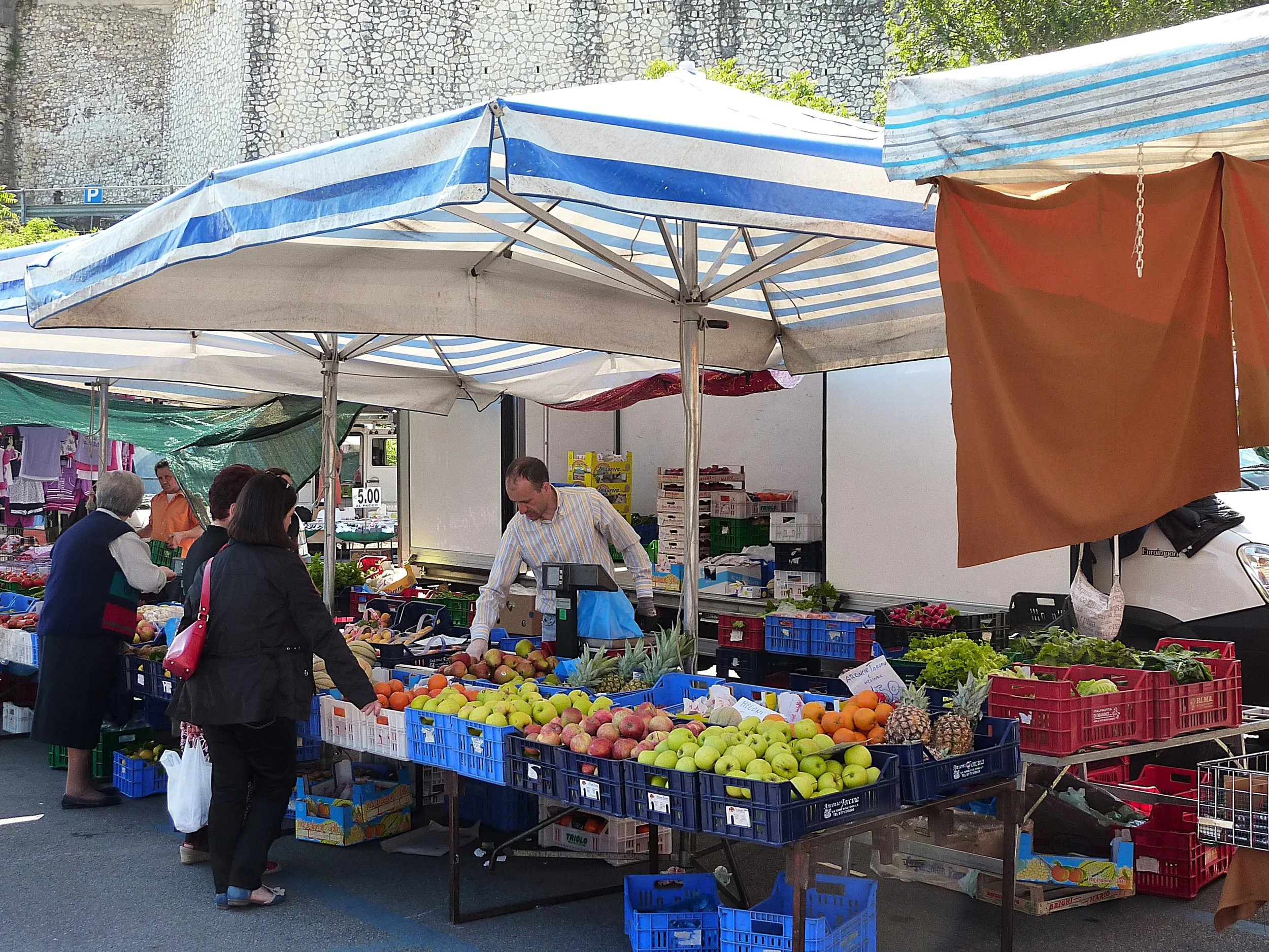
Saturday market in Narni
We’ve just come from Terni, through the usual short afternoon rain shower that falls like a curtain between Terni and Narni. The sun is now shining, and there’s a rainbow. We’re coming back to Narni for our last night, to say goodbye to the friends we’ve made. Yesterday we bought some flowers for the ladies of Caffe Centro and the Sibyl of the Bus Company. We’ve exchanged addresses and email information with our kind hosts at the Pizzeria and the shoemaker’s shop, and made our goodbyes elsewhere around town. We got hugs and free coffee this morning when we delivered the flowers to the Caffe. Now Celeste, who works afternoons, sweeps from behind the counter as we arrive to kiss us firmly on both cheeks. She introduces us to her little daughter and to her mother. The daughter clings to Celeste’s skirts. The regulars at the Caffe laugh and nod and smile as Celeste presents us with gelati – three flavors each! Too soon, the ice cream is melting. It’s time to go. The little girl finally waves us goodbye, shyly, with a hesitant smile and that odd Italian crook of her fingers – a beautiful picture of … well, continuity, I guess.
© Text © 2012 by Joe Gartman; Photographs © 2012 by Patricia Gartman. First published in Italia! Magazine, July 2012