Isabella’s Room
In Hampton Court Palace there’s a marble image of a pretty young woman – just her head and shoulders. She wears a loose wrap over a tunic. Her hair is artfully waved. Her name is Faustina. She was wife to Marcus Aurelius, in the 2nd century AD. It’s an attractive work of art, though not really remarkable. But it was once the pride and joy of two very remarkable people, in another palace, not on the Thames, but on the Mincio, in Mantua.
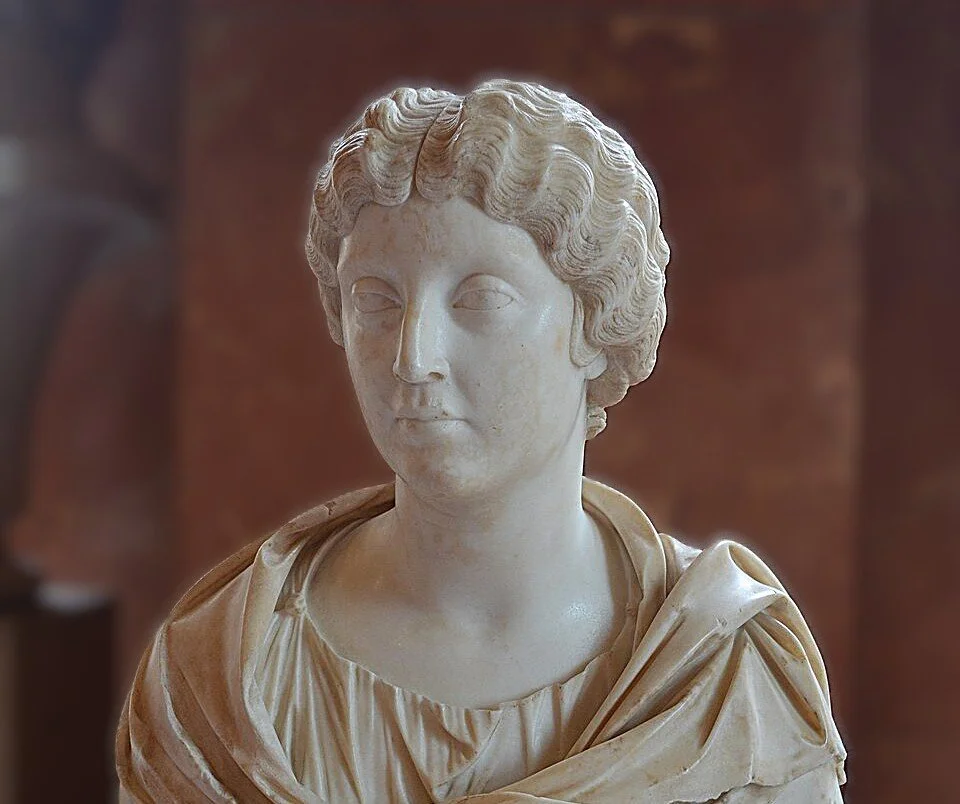
Faustina the Younger, wife of Marcus Aurelius Darafsh, CC BY-SA 3.0 <https://creativecommons.org/licenses/by-sa/3.0>
Four forbidding towers form a corner of the Ducal Palace in Mantua. Together, they’re called the Castello di San Giorgio. There are three rooms in the castle that, to me, contain many ghosts. In one, members of the ruling Gonzaga family gaze from frescoed walls, the uncanny work of Andrea Mantegna. It was and is famous all over the world as the Camera Picta, the Painted Room. Two other haunted rooms, the studiolo and grotta of Isabella d’Este, once held the greatest collection of antiquities, paintings, and statuary ever assembled by a Renaissance woman. Now they are empty.
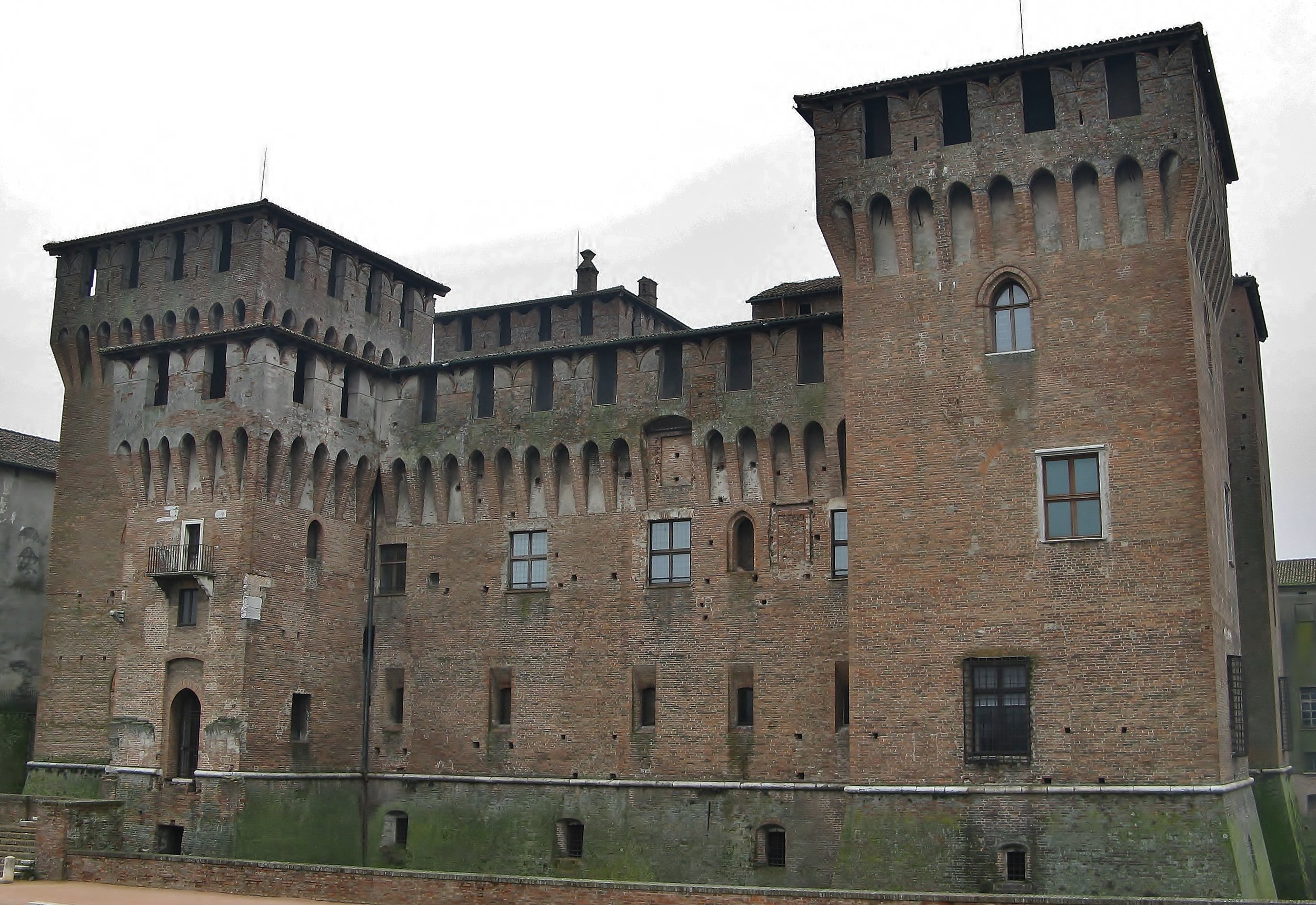
Castello di San Giorgio, Mantua
Isabella was the eldest daughter of the Duke of Ferrara; she was married at 16 to Francesco II Gonzaga, Marquese of Mantua in 1490. She was much more than just a collector. I don’t have room to do her justice, and must content myself by saying that she was a wife, mother of eight, a skilled diplomat who charmed popes, princes, kings and emperors, a successful ruler of Mantua during her husband’s frequent absences, a fashion icon, a musician, a muse of poets, a prodigious letter-writer, a patron of artists, and a hard bargainer. Mantegna, her own court painter, sold Faustina to her for 100 ducats. He didn’t want to, but she knew he needed the money.
She bought from the very best artists. Mantegna, Perugino, Lorenzo Costa and Correggio contributed paintings for her studiolo walls. She had lengthy negotiations with Giovanni Bellini of Venice, with little result. Titian painted a flattering and youthful portrait of her. She hoped for a finished portrait by Leonardo, and he did at least one chalk drawing of her.
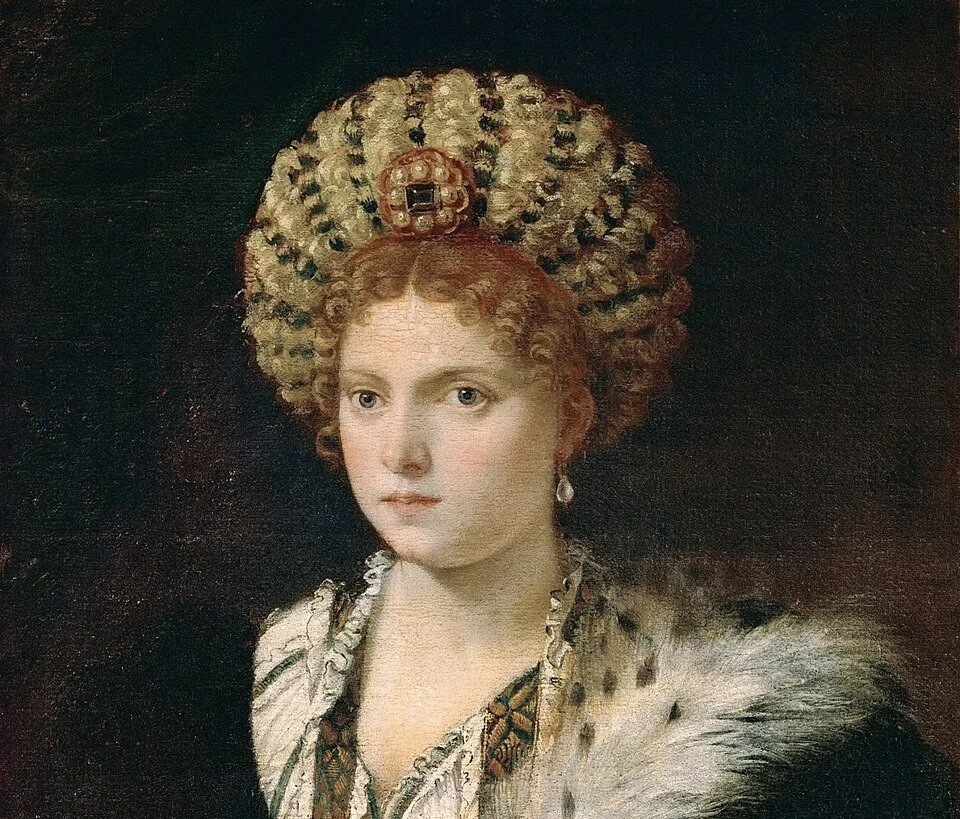
Youthful portrait of Isabella d’Este, by Titian
Despite disappointments, her collection grew in magnificence and fame; in time, the aging Marchesa moved it from Castello San Giorgio to larger rooms in the palace. She died in 1539, a much-admired woman. Mercifully, she did not live to see the decline of the Gonzagas, nor the sale, in 1627, of much of the family’s art assets to Charles I of England.
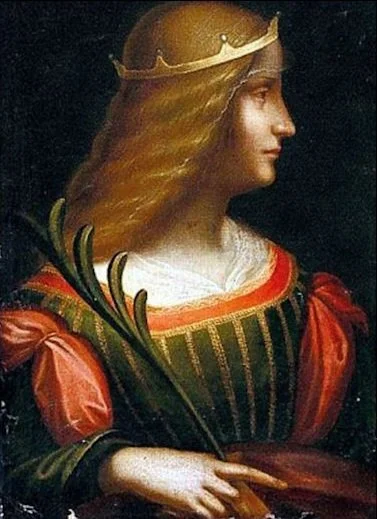
Isabella d’Este, portrait tentatively attributed to Leonardo
Charles soon lost everything including his head, and during the interregnum, most Gonzaga treasures in England were dispersed at auction to other royal collections in Europe. In 1708, in Venice, the cash-strapped Gonzaga family disposed of another 900 precious pieces, enriching palaces, and finally museums, around the world.
But Isabella’s collection, far-flung as it is, may still be growing. A painting has recently surfaced that closely resembles Leonardo’s chalk drawing of Isabella. As I write, its authenticity is being debated. Is this her finished portrait after all? If such things are followed in Paradise, Isabella is probably smiling.
© Text © 2014 by Joe Gartman; Photographs © 2014 by Patricia Gartman. First published in Italia! Magazine, March 2014