The Queen of the Long Roads
Roman Censors, in the days of the Roman Republic, were responsible for enforcing public morals, as the name suggests; but they were also tasked with overseeing public works – roads, bridges, water supply – as well. I don’t know what Appius Claudius Caecus, Censor in 312 BC, did to stamp out vice, but he certainly took public works to heart. He constructed Rome’s first working aqueduct, and built a fine road paved with great basalt stones all the way to Capua. Its main purpose was to move and resupply the Roman legions as they battled the Samnites, a fierce local people whose territory the Romans coveted.
The aqueduct was called Aqua Appia, after Appius Claudius. It lasted three centuries, but crumbled during the reign of Augustus. The road, however, is still with us, in part. No doubt you’ve guessed its name: Via Appia, or, in English, the Appian Way.
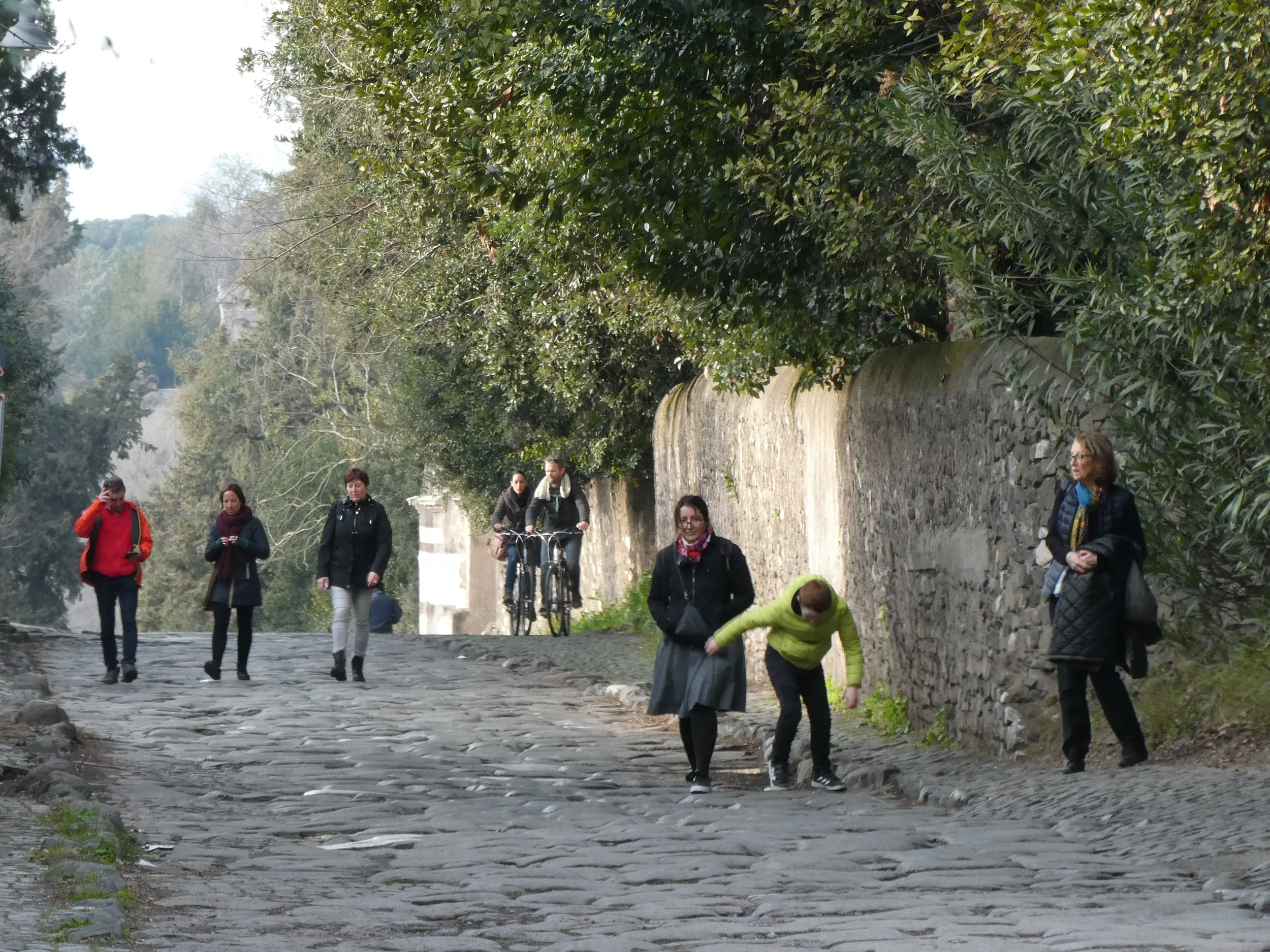
Hikers and bikers on the Appian Way
In time, the Romans extended the road through Benevento and Taranto, all the way to Brindisi. It took half a century, because on the way they conquered southern Italy. Tarentum (Taranto) hired King Pyrrhus of Epirus to stop the Romans. He won the first battle but his casualties were terrible. “Another victory like that, and I am undone,” he said, inspiring the useful phrase “pyrrhic victory.” (The Romans ultimately prevailed.)
From Brindisi, Roman ships could easily reach the Greek peninsula for trade, and then, predictably, conquest. After Rome defeated the Greek Achaean League at the Battle of Corinth in 146 BC, Rome controlled all of Greece. In time, the Romans constructed many more long-distance roads to reach the edges of Rome’s growing domains. “All roads lead to Rome,” it was said, and of them all, wrote the poet Statius, the Appian Way was longarum regina viarum – “Queen of the Long Roads.”
Much of the road now lies beneath the motorways, streets, fields, and cities of today; but there are stretches that can still be found, and walked. Ten miles or so of original road, with sections of the original surface, run straight southeast from Rome’s Porta San Sebastiano gate, surrounded by the Parco Regionale dell’Appia Antica, a huge park and archaeological area.
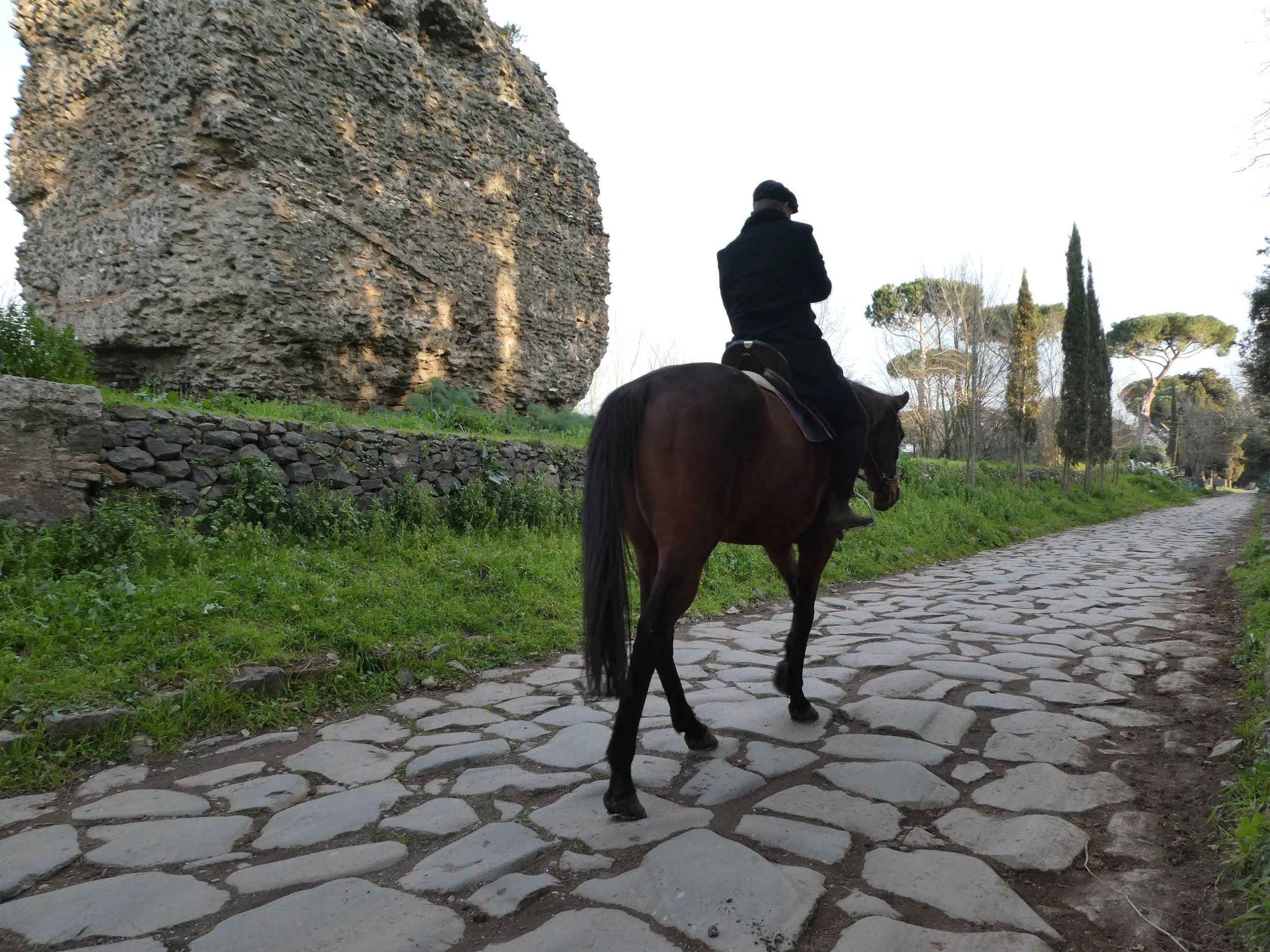
Riding past an ancient and crumbling tomb
When you’re in Rome, go there if you can. But be warned, when the shadows lengthen, you may fancy that ghosts are walking with you, because here Via Appia is surrounded by reminders of mortality. Burials were banned within the city walls, so many weathered tombs of well-to-do Romans, whose names have mostly eroded away, stand at intervals; and on either roadside, underground and unseen, are huge cities of Christian dead, whose labyrinthine tunnels extend for miles.
The first two miles of Via Appia, beyond Porta San Sebastiano where the road begins, are narrow and choked with traffic (except on Sundays, when cars are banned), so you might take a bus (numbers 118 or 218) to the Church of Domine Quo Vadis where an old legend says that Peter, fleeing persecution in Rome, met Jesus, walking toward the city. “Lord, where are you going?” he asked. “I am going to Rome, to be crucified again,” Christ replied; at which Peter turned back toward the city to be martyred. Footprints on a stone inside the church are believed, by the faithful, to be Christ’s.
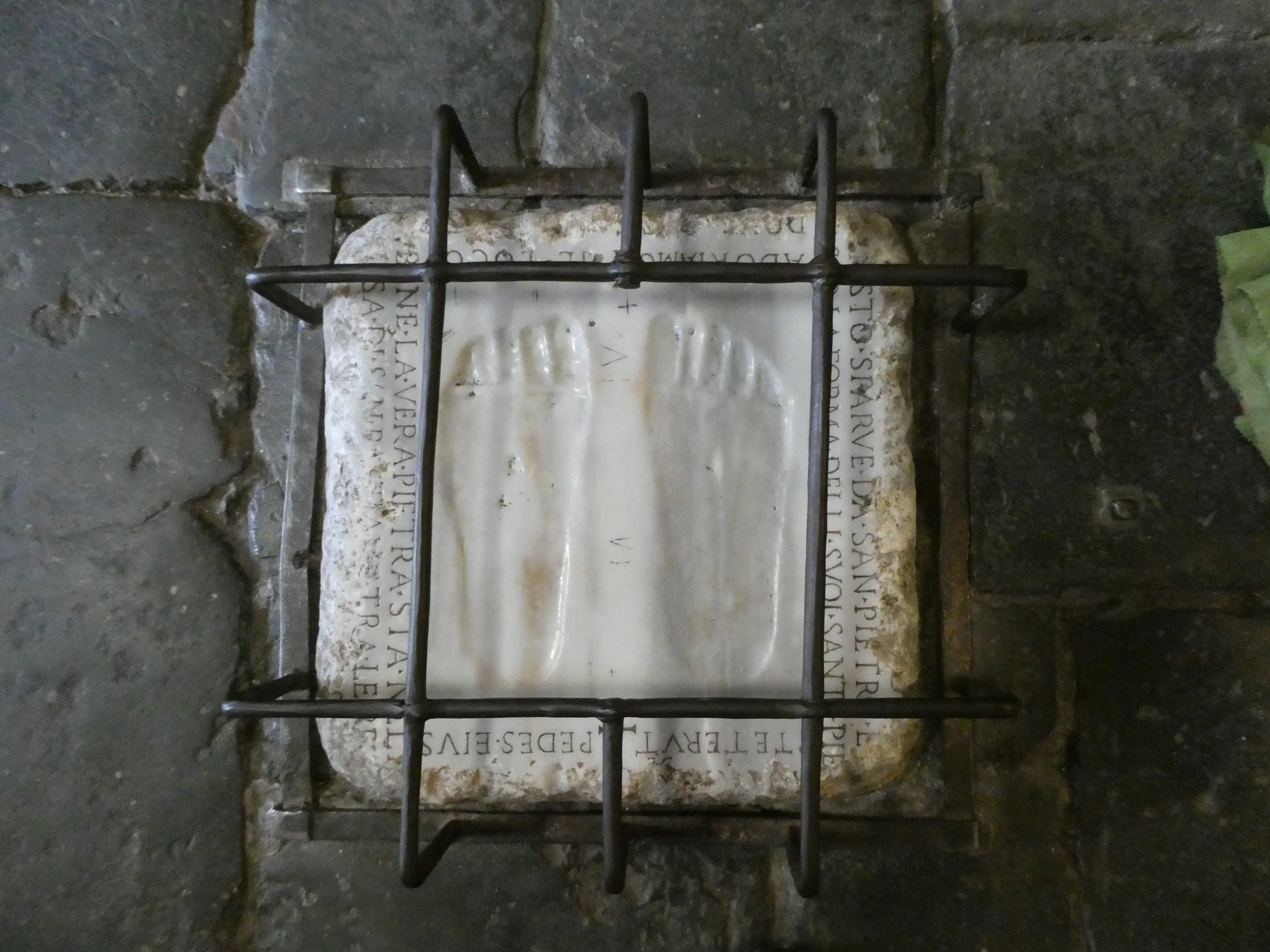
Sacred footprints in the Quo Vadis church
You can avoid walking the next narrow section of Via Appia by taking bus 118 to the “Catacombe di S. Callisto” stop. The entrance to these Catacombs of Callixtus (closed on Wednesday) is just beyond the bus stop. Here, half a million early Christians were buried long ago. Callixtus was a slave and gravedigger and early Christian Pope. If you like, you can join an underground tour here, before taking a tree-lined path to the Basilica and Catacombs of San Sebastiano. You can rejoin the Via Appia here.
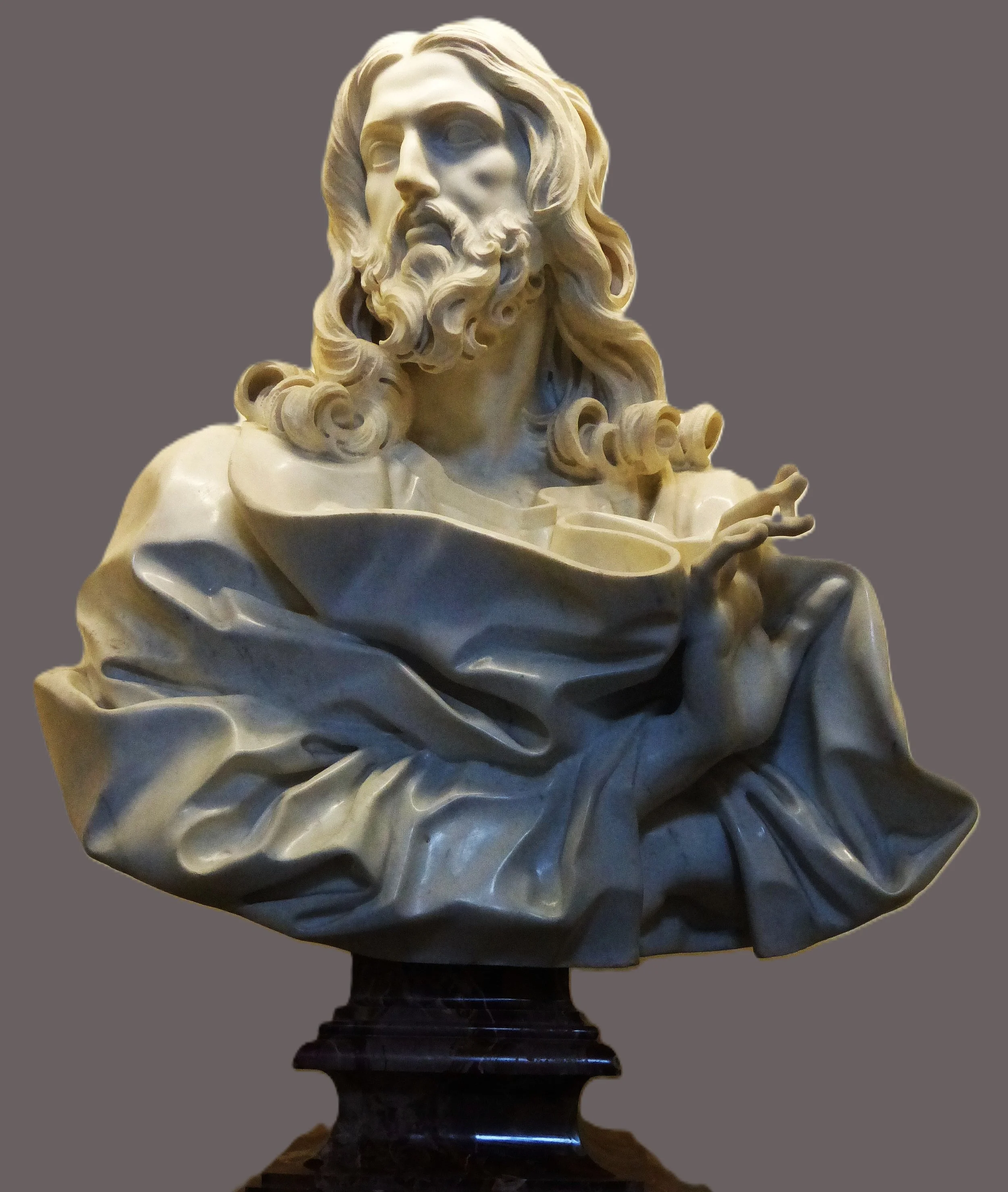
“Salvatore Mundi”, Gian Lorenzo Bernini’s last work, carved when he was 82 years old. It’s in the Basilica of San Sebastiano.
Soon, on the left, two great towers rise in the middle distance. They were the starting gates for the Circus of Maxentius, a huge arena for chariot races, part of Emperor Maxentius’ Villa. His palace ruins are nearby. Maxentius’ teenage son, Valerius, died just after the arena was finished, in 309 AD; in 312, Maxentius died fighting Constantine’s army at the Battle of the Milvian Bridge. Funeral games for Valerius may have been held here; otherwise, the 1700-year-old stadium was never used.
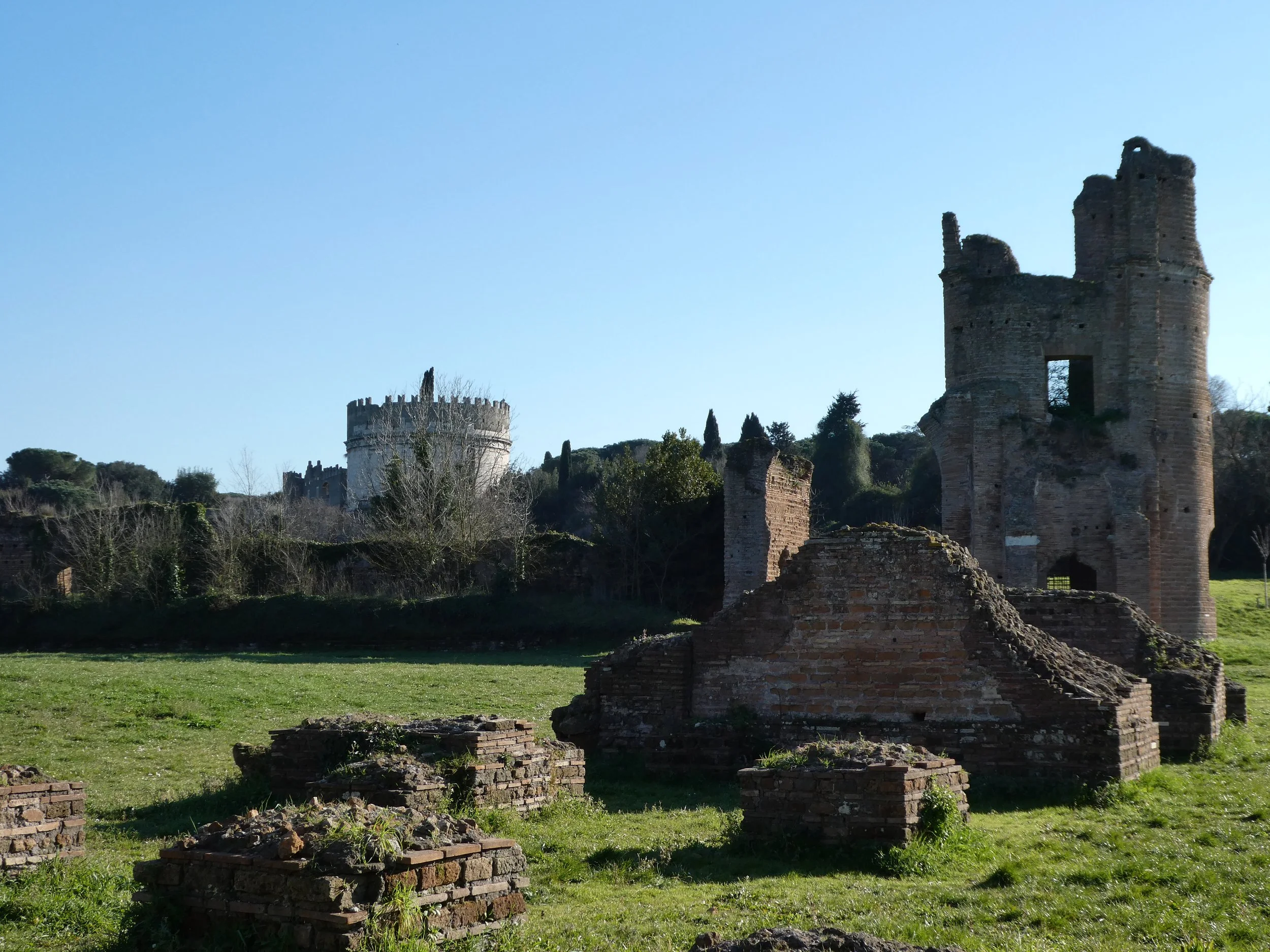
A starting-gate tower of the Circus of Maxentius in the foreground - in the distance, the round tower of Cecilia Metella’s Mausoleum
Leaving the luckless Maxentius’ villa behind, you’ll quickly reach the largest and best-preserved tomb on the Via Appia, the Mausoleum of Cecilia Metella. We know nothing at all of Cecilia except that she was the daughter-in-law of the wealthy and avaricious Marcus Licinius Crassus, who crushed the Spartacus slave revolt, crucified 6000 slaves along the Appian Way, and, legend says, met his death at the hands of the Parthians, when they poured molten gold down his throat in 53 BC.
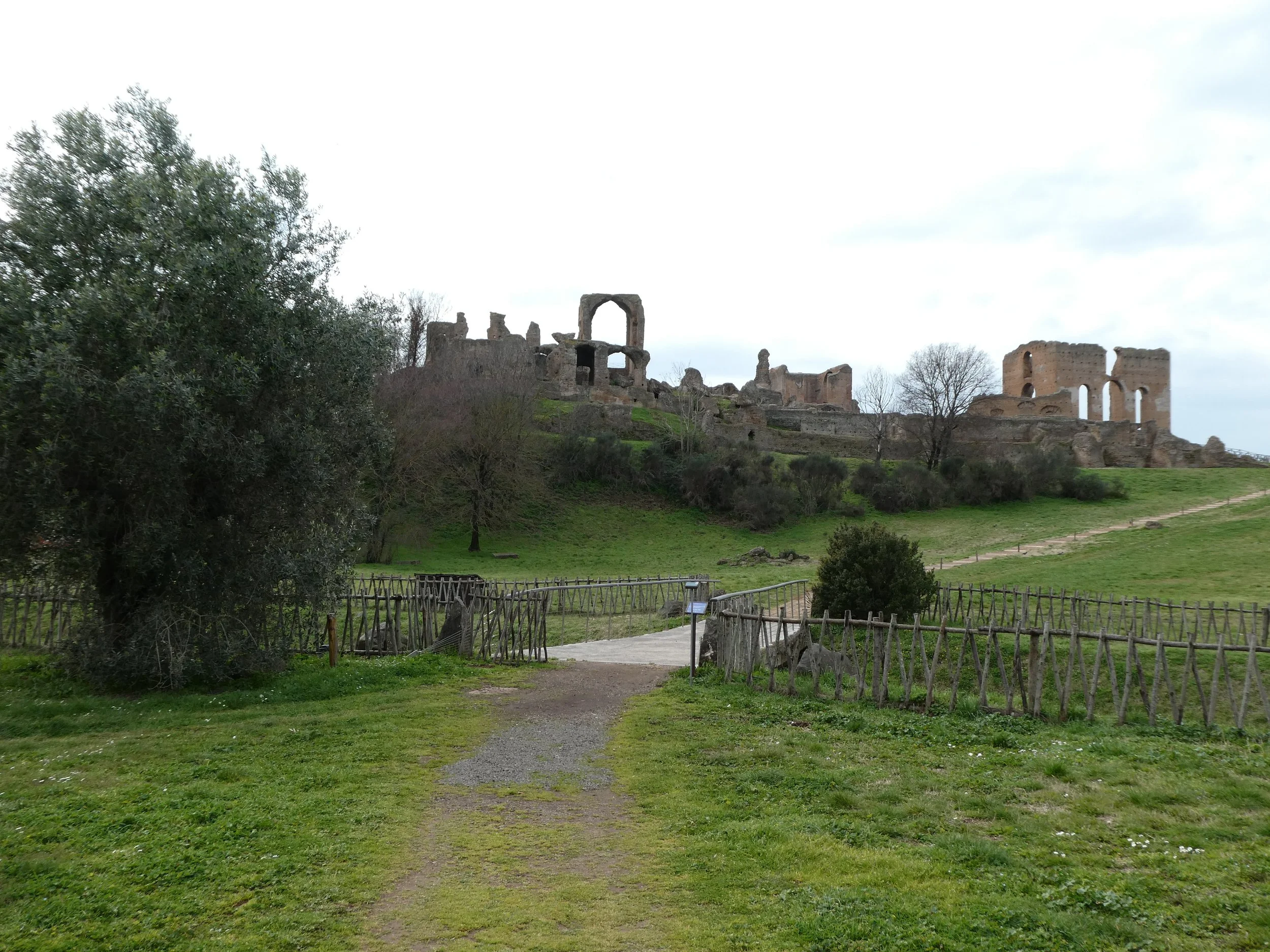
Villa of the Quintilii
Soon, the modern cobbles on which you’ve been walking are replaced by great, time-worn blocks of black basalt, laid down by Appius Claudius long ago, as if the old Censor’s ghost beckons you on. If you choose to go, you’ll pass the tomb of Seneca, the philosopher who stoically committed suicide at Nero’s bidding, and later the vast, ruined villa of the Quintilii brothers, murdered by Marcus Aurelius’ evil son Commodus so he could possess their magnificent home. A few miles on, the road becomes a weed-grown track and finally vanishes in a dusty, barren field.
Nevertheless, the Via Appia continues on its way, just beneath the surface of our modern world. Near Ariccia and Minturno, Terracina and Benevento, Taranto and Mesagne, and no doubt other places known or unknown, the ancient stones resurface tantalizingly; but in Brindisi, a venerable marble column (and its missing companion’s base) overlook the Adriatic, and welcome travellers to the true end of the road.
© Text © 2018 by Joe Gartman; Photographs © 2018 by Patricia Gartman. First published in Italia! Magazine, March 2018