The Lost Ships of Nemi
In the Alban hills, 20 miles south of Rome, the little town of Nemi sits on a clifftop above a small, nearly circular, volcanic lake. The lake is less than a square mile in area. Long ago, there was a temple and an oak grove sacred to Diana on the north shore of the lake. Diana, the twin sister of Apollo, was goddess of the hunt, childbirth, and of the moon. In summer, seen from Nemi or the surrounding hills, the moon was reflected clearly in the water; and so the lake, from ancient times, was called “The Mirror of Diana”.
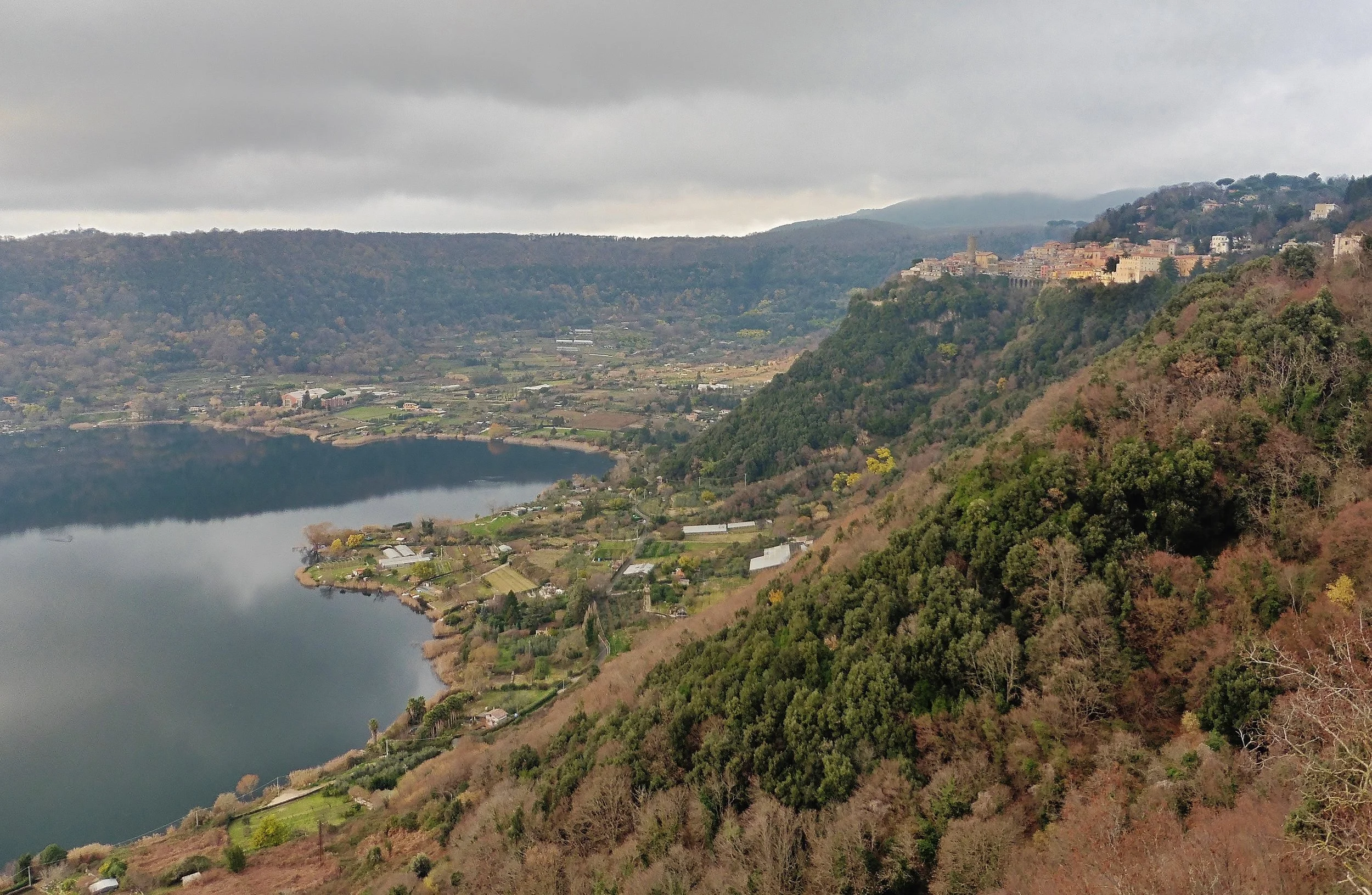
Lake Nemi, overlooked by the town of Nemi
The high priest of Diana’s grove and temple was the Rex Nemorensis, King of the Sacred Grove. His rule was absolute; and the penalty for breaking a branch from one of the sacred trees was death. But there was an exception: if an escaped slave brought a sacred branch to the king, he could challenge the king to mortal combat. If the slave won, he became Rex Nemorensis. Or so goes the legend.

An excavated section of Diana’s Via Sacra in the Museo delle Navi Romane
Diana’s shining face was not all that dwellers in the hills could see in the lake. There were dark and shadowy forms visible below the placid surface of the water: the unmistakable images of two giant ships.
Of course there were attempts to investigate the mysterious vessels, but the depth at which they lay – sixty feet – was too deep for salvage until fairly recent times. In 1446 Leon Battista Alberti used grappling hooks and secured a few pieces of wood. A man named Elisio Borghi, using hired divers in 1895, retrieved a number of beautiful items: cast bronze animal heads, a bronze Medusa image, polychrome mosaic floor tiles, and more. However, Borghi’s efforts caused considerable damage to the ships.
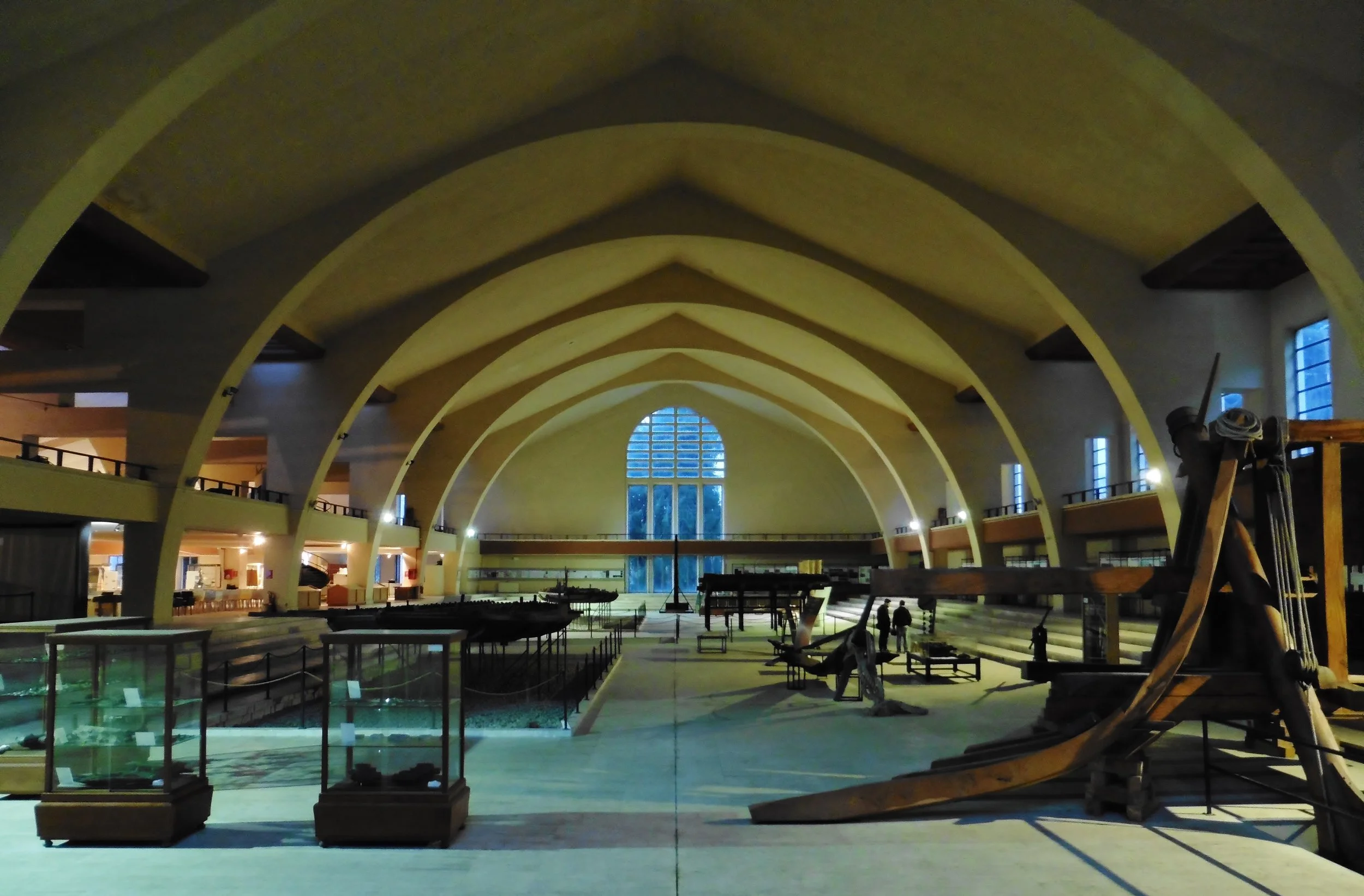
One of two gigantic bays in the museum, to house the two great ships
In 1927, Benito Mussolini, with characteristic pugnacity, ordered Italian Naval engineers to drain the lake. Local lore spoke of an ancient Roman underground irrigation channel, long unused; it was reopened and powerful hydraulic pumps began to direct lake water through the channel. By summer of 1931, 40 million cubic metres of water had been removed, the lake’s level had fallen 66 feet, and the first ship had been recovered. Before the second ship could be retrieved, though, thousands of tons of mud, freed from the pressure of the lake’s water, erupted from the lake floor. Work stopped and pumping did not begin again until March, 1932. The second ship was recovered in October.
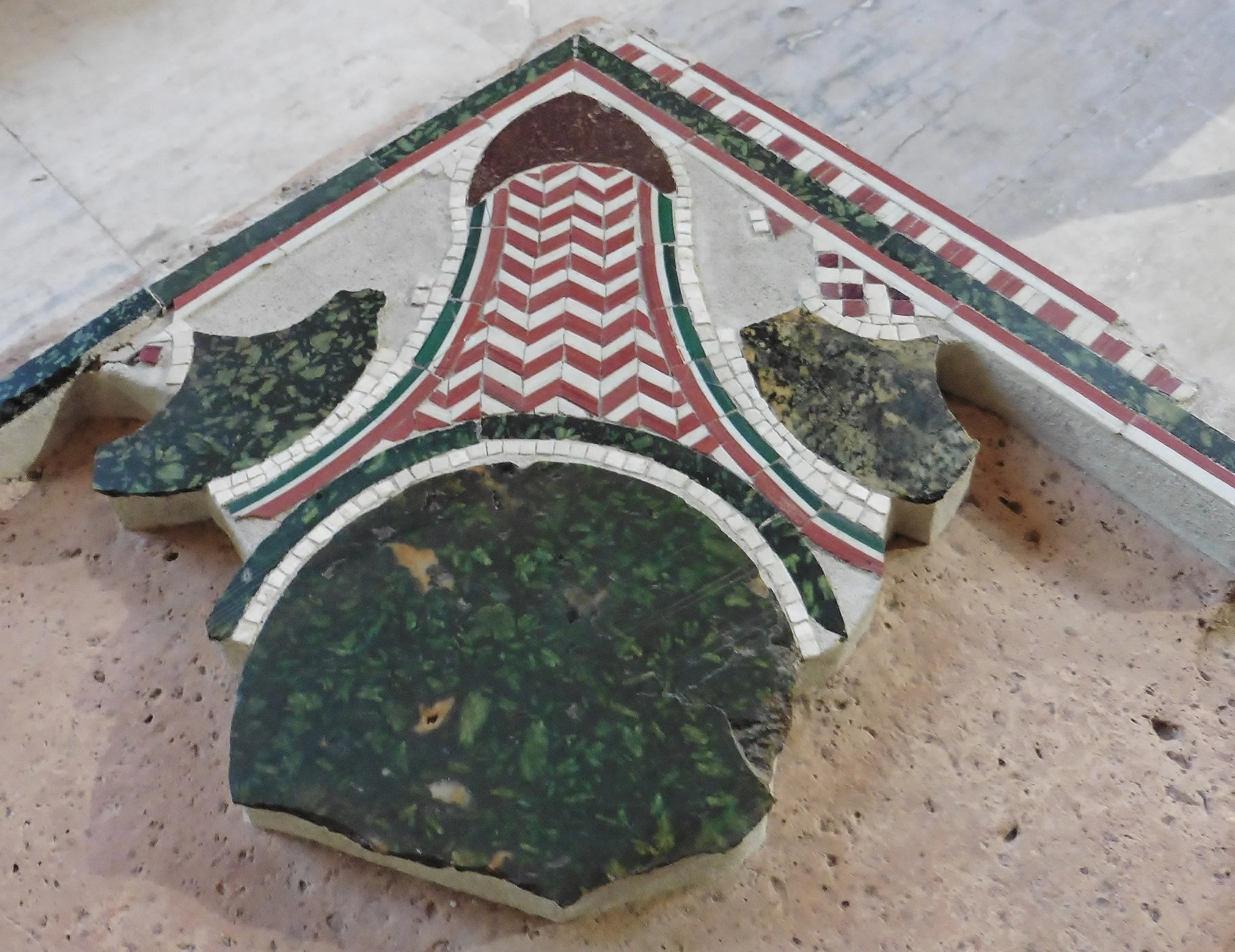
A fragment of mosaic floor from the floating palace
Now on dry land, the ships began to reveal their secrets. The second ship was largest, 240 feet long, with a beam of 80 feet. It seems to have had been outfitted as an elaborate shrine to Diana. The first ship, 230 feet long by 66 feet, had been a luxurious floating palace, with statuary, polychrome mosaic floors, decorative marble relief sculptures, and baths with hot and cold running water. Sumptuous living and dining quarters, linked by stairs and corridors, were roofed with gilded tiles.
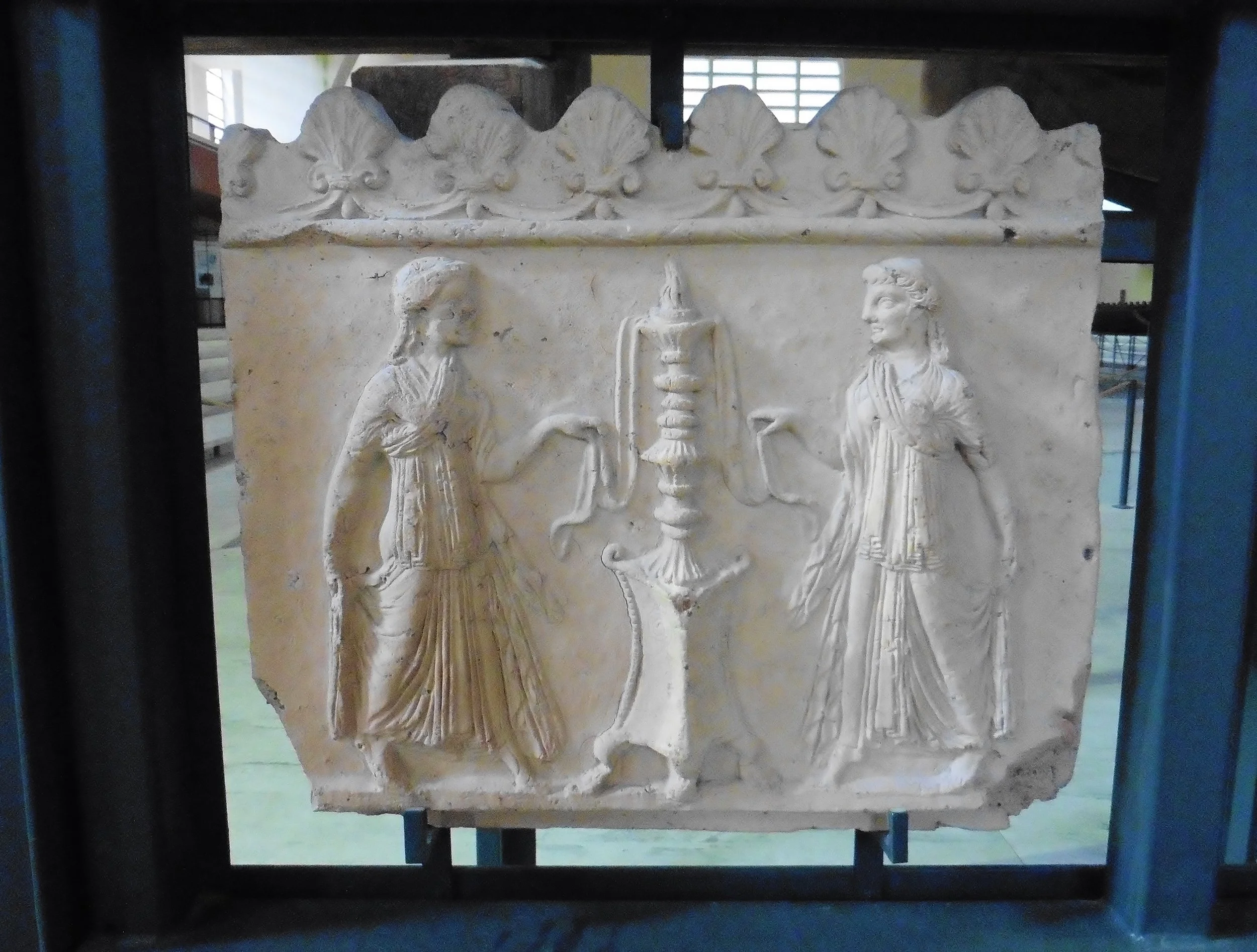
Marble relief panel recovered from the “floating palace” ship
The owner’s identity was unknown until a lead water pipe was discovered, marked “property of Gaius Caesar Augustus Germanicus”. We know him better by his childhood nickname – “Little Boots” – Caligula.

Broken statue of Caligula, recovered from the lake
In 1935, the Fascist government built a magnificent building of cast concrete to house the ships. The building is still there on the shore of Lake Nemi, just below the town. But the ships are not. In 1944, both ships were consumed by flame within their concrete home, leaving only ashes and a few charred beams. German troops fleeing the American advance may have torched them.

A one-fifth-scale replica of the hull of the “floating palace” seems lost in the bay intended for the real ship
The huge concrete building is now a museum. Despite the presence of two one-fifth-scale replicas of the ships, bronze fittings, documents, statuary, ceramics, votive figures from Diana’s sanctuary, and a broken statue of Caligula, the vast structure seems haunted and empty. There is a section of Diana’s old Via Sacra there, as well; where once, perhaps, Rex Nemorensis saw his fate approaching, carrying an oak branch. As for Caligula, he was murdered by his own Praetorian Guard soon after the ships were built. No one knows who scuttled them.
© Text © 2016 by Joe Gartman; Photographs © 2016 by Patricia Gartman. First published in Italia! Magazine, September 2016