The Winding Path to Purgatory
The Umbrian city of Orvieto sits in splendour atop a high rocky crag. The cliffs foiled medieval besiegers, but you can storm the citadel in a comfortable funicular railway. Once there, you’ll probably spot the magnificent façade of the cathedral and head inside to view Luca Signorelli’s frescoes of the resurrected dead struggling out of the clinging earth to await the Last Judgement. The muscular nudes probably inspired Michelangelo’s powerful images in the Sistine Chapel.

The Resurrection of the Flesh, by Luca Signorelli, (detail), c. 1502, San Brizio Chapel, Orvieto Cathedral
If Signorelli had been around from the first occupation of the hill by the Etruscans, around 800 BC, he might have seen quite a few figures emerging from the earth, and descending into it as well; because the settlers soon discovered that their mighty mountain was composed of stone so soft they could almost crumble it between their fingers.
Orvieto is built on a base of tuff and pozzolana, volcanic material deposited there sometime in the last three million years or so. The area has no surface water, so early inhabitants first dug wells, no doubt. But the stone was easily excavated; so over time wells, tunnels, cisterns, and galleries by the hundreds were created. And in Roman times, tons of pozzolana were extracted for cement.
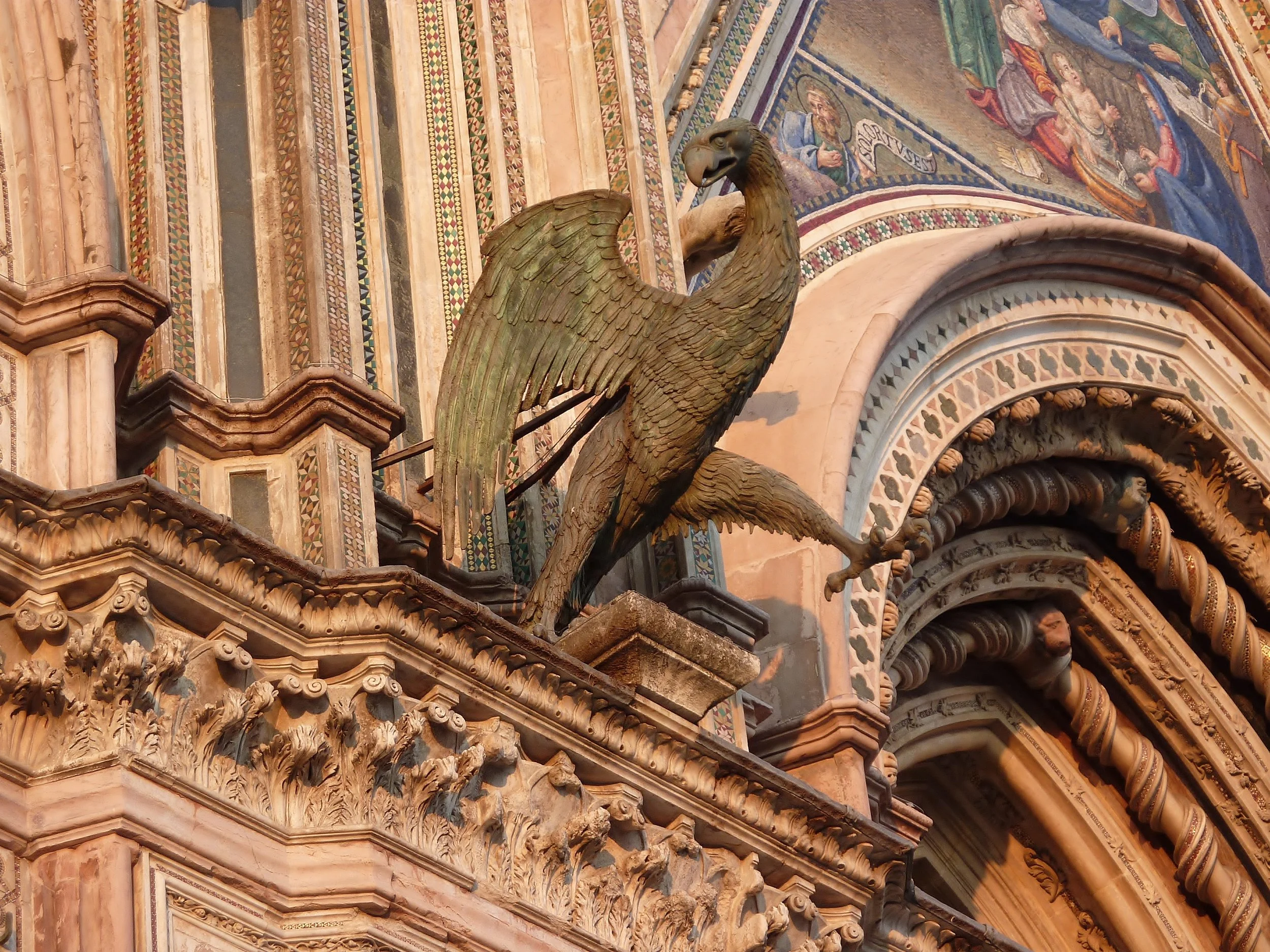
Orvieto Cathedral Facade
In places the excavations pierced the faces of the cliffs, letting in light and air, and for centuries, wherever pigeons could fly in and out, the townfolk hollowed out neat rows of nesting-holes in the chamber walls. These “pigeonhole” walls supplied eggs for breakfast and squab for dinner: creative farming, indeed. You can visit other wonders of the subterranean city, including the columns that keep Orvieto from sinking into its own sub-basement, on the “Orvieto Underground” tour.
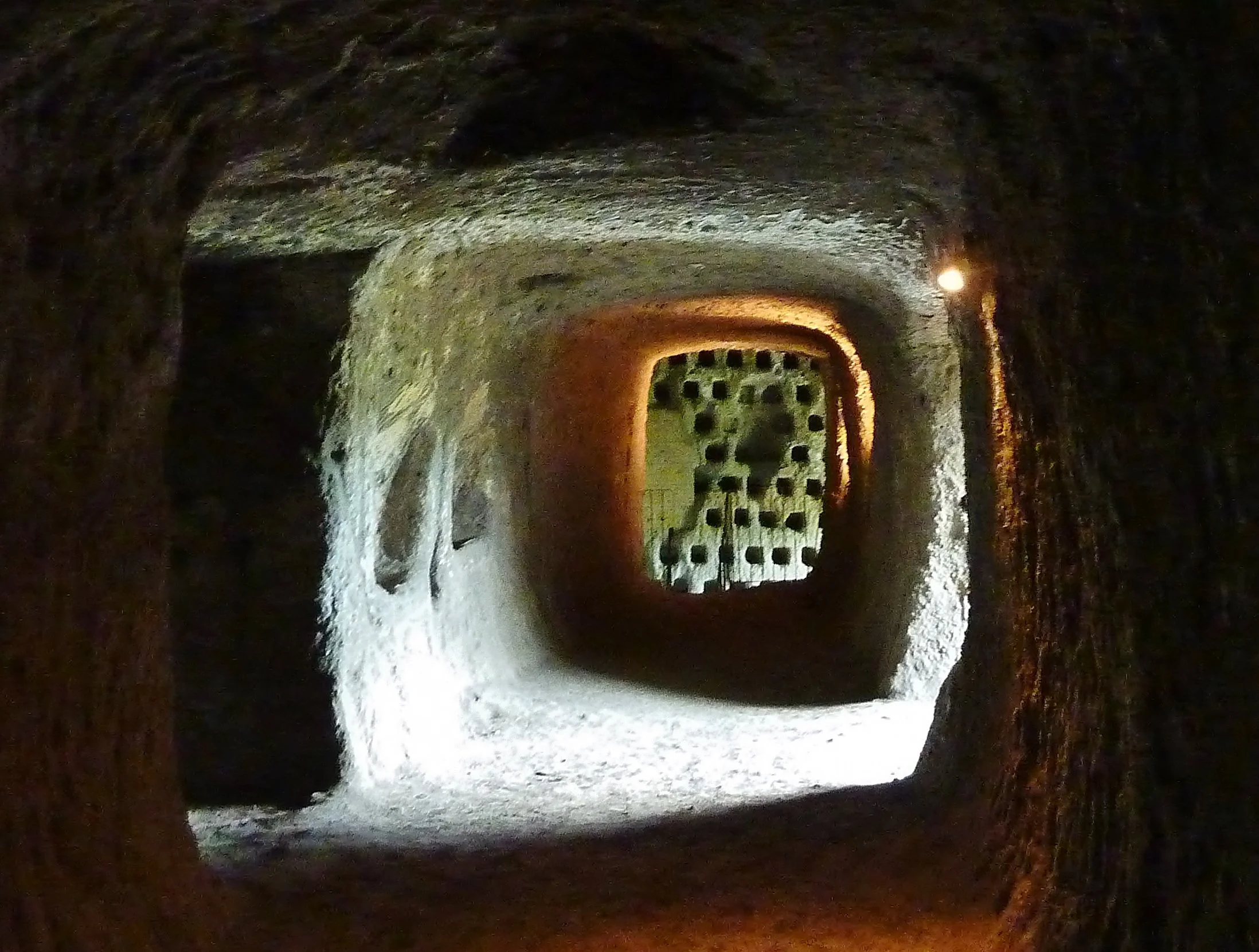
Pigeonhole wall beneath Orvieto
But there’s a place where you can descend much, much deeper, if you dare.
In 1527, Pope Clement VII sought refuge in Orvieto as the mutinous troops of Emperor Charles V sacked Rome. Fearful that Orvieto might also be attacked, Clement ordered the architect Antonio da Sangallo the Younger to construct a well that could meet the needs of the city under siege. Sangallo did – though it took ten years to complete. As the digging continued, people remembered a legend: how Christ, long ago, showed St. Patrick a deep pit in County Donegal, Ireland, which was the entrance to Purgatory; and how Patrick converted sinners by showing them the fearful pit. Soon, people called Sangallo’s well Pozzo di San Patrizio, because they thought he might strike Purgatory before he found water.
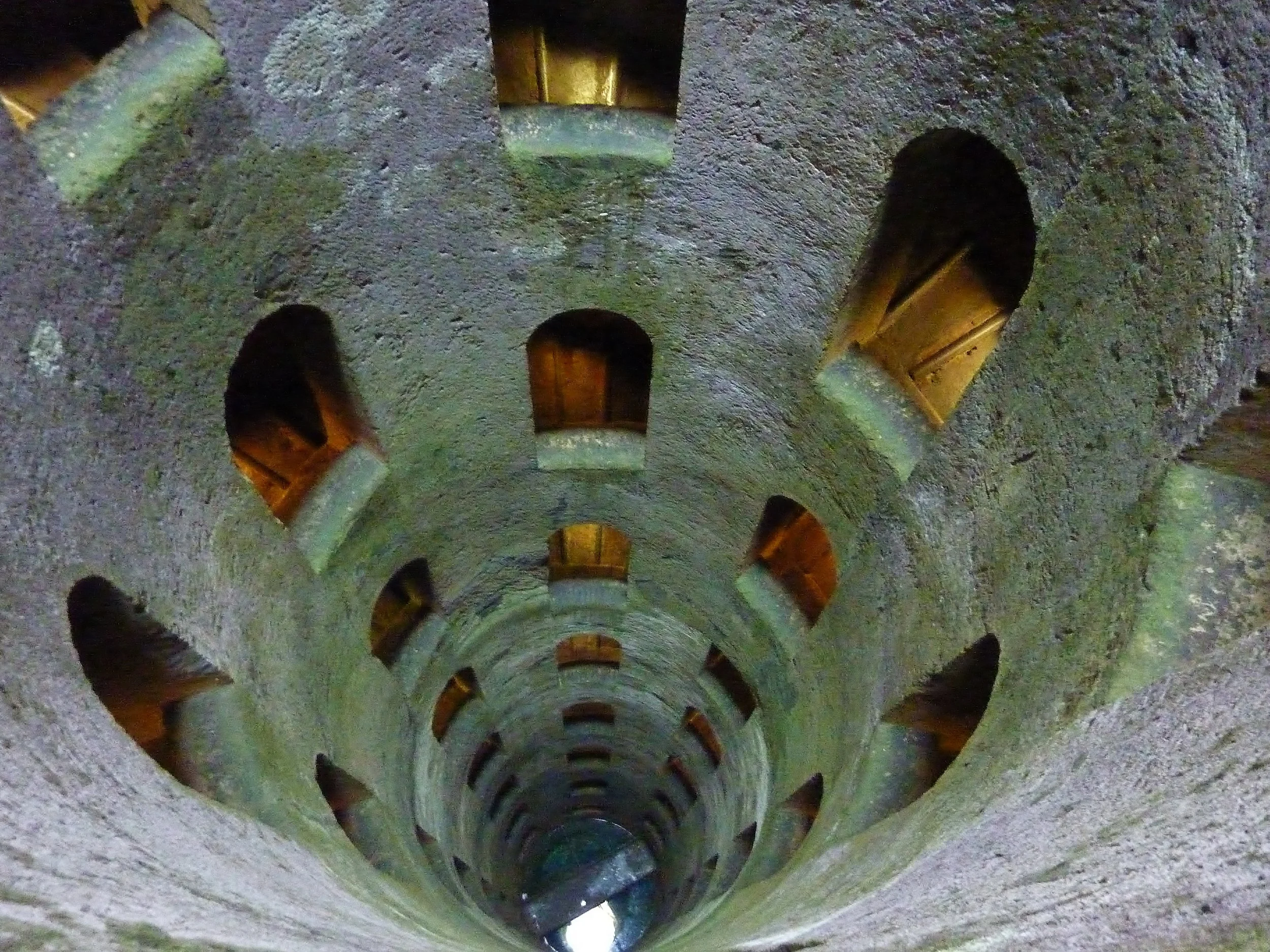
Pozzo di San Patrizio. The light shining from the bottom is reflected from the wellwater.
You can climb down the spiral stairs to see which he found. You won’t meet anyone coming up, because Sangallo cleverly made two staircases, arranged in a double helix. Upward-bound donkeys laden with full vessels never encountered descending donkeys carrying empties.
70 windows pierce the inner staircase walls, allowing sunlight from the top to dimly illuminate the 248 steps. At the bottom, you will find water that looks very dark, very deep, and very cold. A dip in it might be a bit purgatorial. People who suffer from claustrophobia or a guilty conscience should probably not go. In any case, be sure you take the up staircase when you leave.
© Text © 2015 by Joe Gartman; Photographs © 2015 by Patricia Gartman. First published in Italia! Magazine, September 2015