The Silkworms of San Leucio
Over the centuries, from Plato to Thomas More to H.G. Wells and beyond, writers and philosophers have tried to describe an ideal society, free from injustice, violence, greed, envy and strife. Thomas More, in fact, coined our word for such a place, when he wrote of his ideal island community and called it Utopia. He was a bit of a joker, though, old Thomas, because there are two Greek words from which he may have derived the name: eutopos (good place) or outopos (no place). We’re left to wonder whether he was an idealist or a cynic.

Sir Thomas More by Hans Holbein the Younger, 1527 (Detail)
I found myself musing on this knotty subject a few months ago while touring a historic silk factory in the village of San Leucio, near Caserta in Campania. The woman conducting the tour spoke rapid and enthusiastic Italian, so I’m not really sure how all the antique machinery worked, or where they kept the mulberry trees – silkworms only eat mulberry leaves, you know. (But Joe, you may object, reasonably enough, I thought you were musing about utopian societies. Why mulberries?)
Well, it’s because this silk factory was the heart of a utopian community that began in 1778. During the “Age of Enlightenment” in the 17th and 18th centuries, hundreds of small communes, collectives, and sects were formed, each with its own recipe for utopian bliss. Most failed, but some, like Robert Owen’s New Lanark cotton mill in Scotland, showed that commercial success and humane living and working conditions could exist together – at least for a while.
But this one, in San Leucio, wasn’t founded by a stern Welsh reformer like Owen. Its founder was a very unlikely reformer indeed. Let me explain …

18th-century workers’ houses in San Leucio
It was an uncomfortable time for the crowned heads of Europe. Dangerous ideas, like reason, and natural rights, began to be discussed. It became difficult to convince their subjects that their exalted positions were ordained by God. Louis XIV (L’etat c’est moi) could get away with it. He’d been on the French throne so long the claim seemed almost literally true; everybody else had to look for another justification.
Charles of Bourbon, King of Naples, seemed to embody the “Enlightened Absolutist” theory, in which the monarch provides “enlightened” government, but without granting the people a voice in the process. Charles was popular in Naples, but he headed for Madrid to become Charles III of Spain when his half-brother, King Ferdinand VI, died. He abdicated the Naples throne to his 9-year-old son, also called Ferdinand, who became King Ferdinand IV of Naples, with Bernardo Tanucci, the Prime Minister, as Regent.
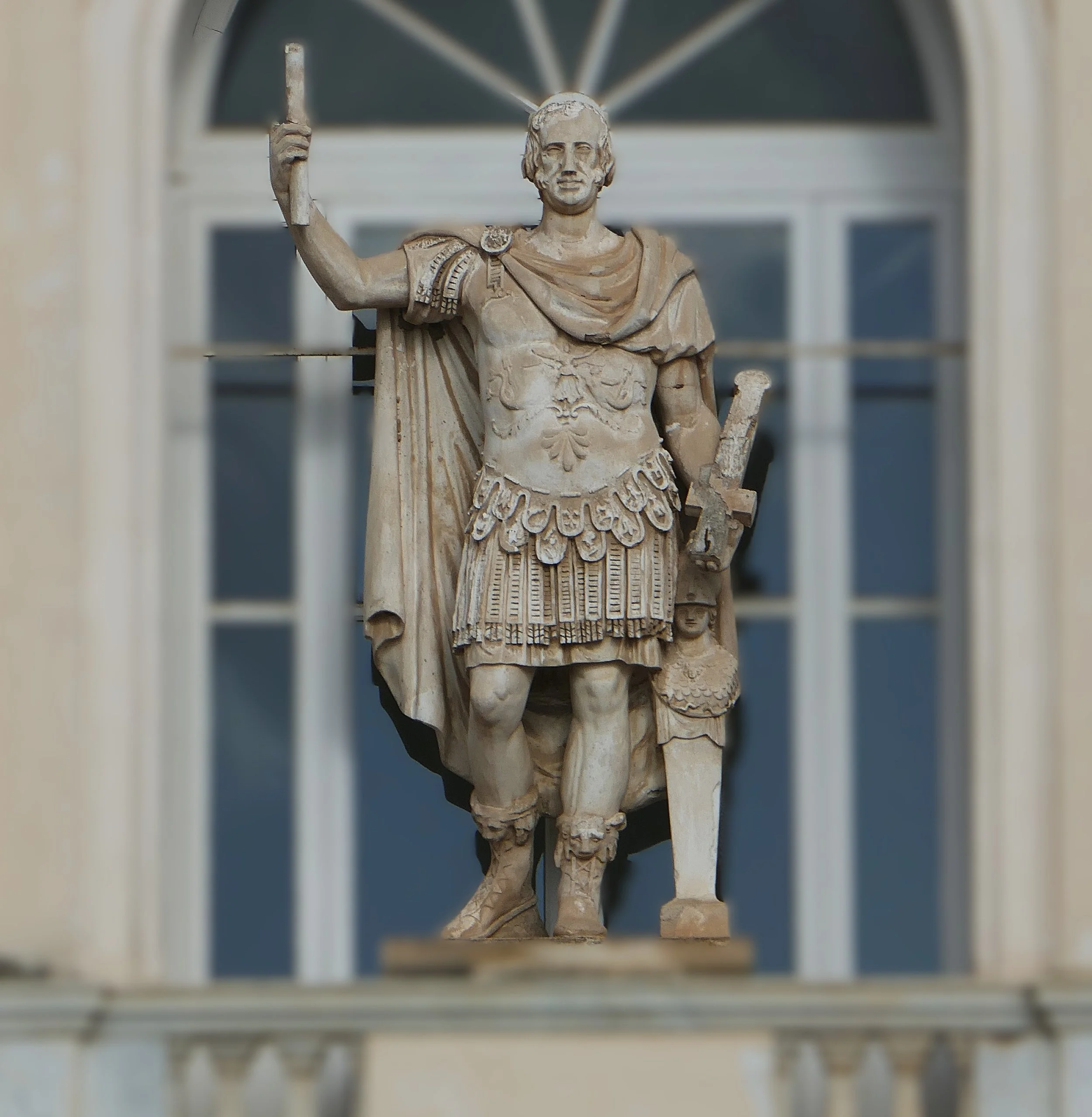
King Ferdinand IV of Naples, sculpted in the costume of a Roman Emperor
As he grew older, Ferdinand turned out to be a rather lazy teenager, happy to let Tanucci rule while he went hunting with his pals; but in 1768, things changed. For political reasons, he was obliged to marry Maria Carolina, daughter of the Holy Roman Emperor Francis I and Empress Maria Theresa. Neither Ferdinand nor his bride was enthusiastic when they first met. Maria Carolina found Ferdinand “very ugly,” and after their wedding night, he complained that she “sweated like a pig.” Still, Maria Carolina bore 18 children during their marriage! (Only 7 survived to adulthood.)
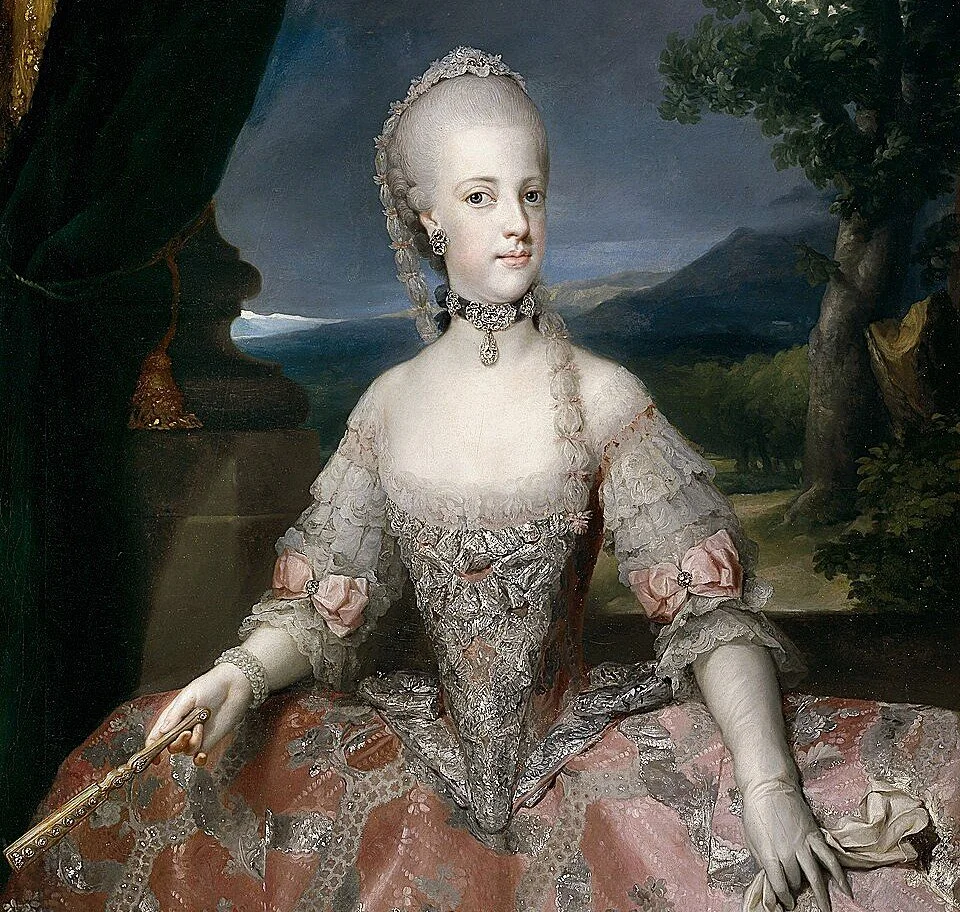
Maria Carolina, Queen of Naples, by Anton Raphael Mengs, 1768 (Detail)
Maria Carolina’s marriage contract gave her a place on the king’s Privy Council, and, after managing to oust Tanucci, she took practical control of the government, aided by Sir John Acton, her new Prime Minister (and, possibly, her lover). Ferdinand, meanwhile, remodelled a crumbling 16th century hilltop palace into a hunting lodge and pleasure palace, the Belvedere di San Leucio, not far from the vast Reggia di Caserta, the royal residence his father Charles had commissioned in 1750. The hilltop overlooked the village of San Leucio, with the Reggia visible beyond. It was here that, in 1778, his and Maria Carolina’s firstborn son, Crown Prince Carlo Tito died of smallpox, aged 3.

The Belvedere di San Leucio, palace and silk factory
The palace exterior looks a bit forlorn and battered by the elements nowadays. From the forecourt down to the village below, I saw rows of two-story terraced houses, with tile roofs and identical facades. Waiting for the tour, I knew little of the history of the place, except that Ferdinand commissioned the conversion of parts of the palace into a silk-producing factory after the death of Prince Carlo. But I soon learned much more:

A row of Jacquard looms
The Royal couple’s new enterprise used the very latest equipment, and to staff the factory, they established the Royal Colony of San Leucio. Families who joined the colony received a well-built house. Each house had running water. The workday was set at 11 hours rather than the usual 14. There were free medical facilities. Men and women were equal under the colony’s statutes, and received equal pay. Child labour was banned. School was mandatory for both girls and boys. Arranged marriages were forbidden! But the statutes were frankly paternalistic. Ferdinand wrote that his laws were “… like instructions given by a Father to his children rather than laws written by a legislator for his subjects.”

A Throwing Machine (Filatoio), which twists and spins silk threads onto bobbins
The Royal Colony survived for a surprisingly long time, producing fine quality silk all the while, even during the French Revolution (1789 – 1799), which severely tested Maria Carolina’s Enlightenment sympathies, especially in 1793 when her sister, Marie Antoinette, was beheaded in Paris. The French forced Ferdinand and Maria Carolina to flee to Sicily twice in the aftermath of the revolution, and Ferdinand had to wait until 1815 to securely regain his throne from Napoleon.
Silk was produced in the Royal Factory until the mid-19th century. Private companies around San Leucio continue the tradition. Someday when I return, perhaps I’ll find that hidden mulberry grove.

Product Samples of the Real Fabbrica della seta di San Leucio
© Text © 2024 by Joe Gartman; Photographs © 2024 by Patricia Gartman. First published in Italia! Magazine, August/September 2024