If Walls could Talk
Let’s suppose you’re heading south on Via San Sebastiano in Rome, on your way to enjoy a healthful stroll along the ancient Via Appia. (And why wouldn’t you be, especially on a fine, sunshiny day?) Just before you reach Porta San Sebastiano, the great 3rd century gate in the Aurelian walls, you’ll find an ancient arch straddling the roadway. (If you’re wondering who San Sebastiano was, cast your mind back to all the church paintings you’ve seen of a fellow tied to a column and bristling with arrows. That’s St. Sebastian.) He’s buried in the catacombs named for him, just a couple of miles beyond the gate, on the Appian Way.
But about the arch – you might consider stopping to take a look at it. It’s battered and crumbling, festooned with weeds, perfect for that moody photograph or poetic selfie. It’s called the Arch of Drusus. Drusus was Augustus’ stepson, who fell off his horse and died while campaigning in Germania. The arch is a bit mysterious. Some experts say it was built to carry a branch of the Aqua Marcia aqueduct, other experts say don’t be ridiculous, it’s an earlier monument to Trajan. But they all agree it has nothing to do with Drusus.
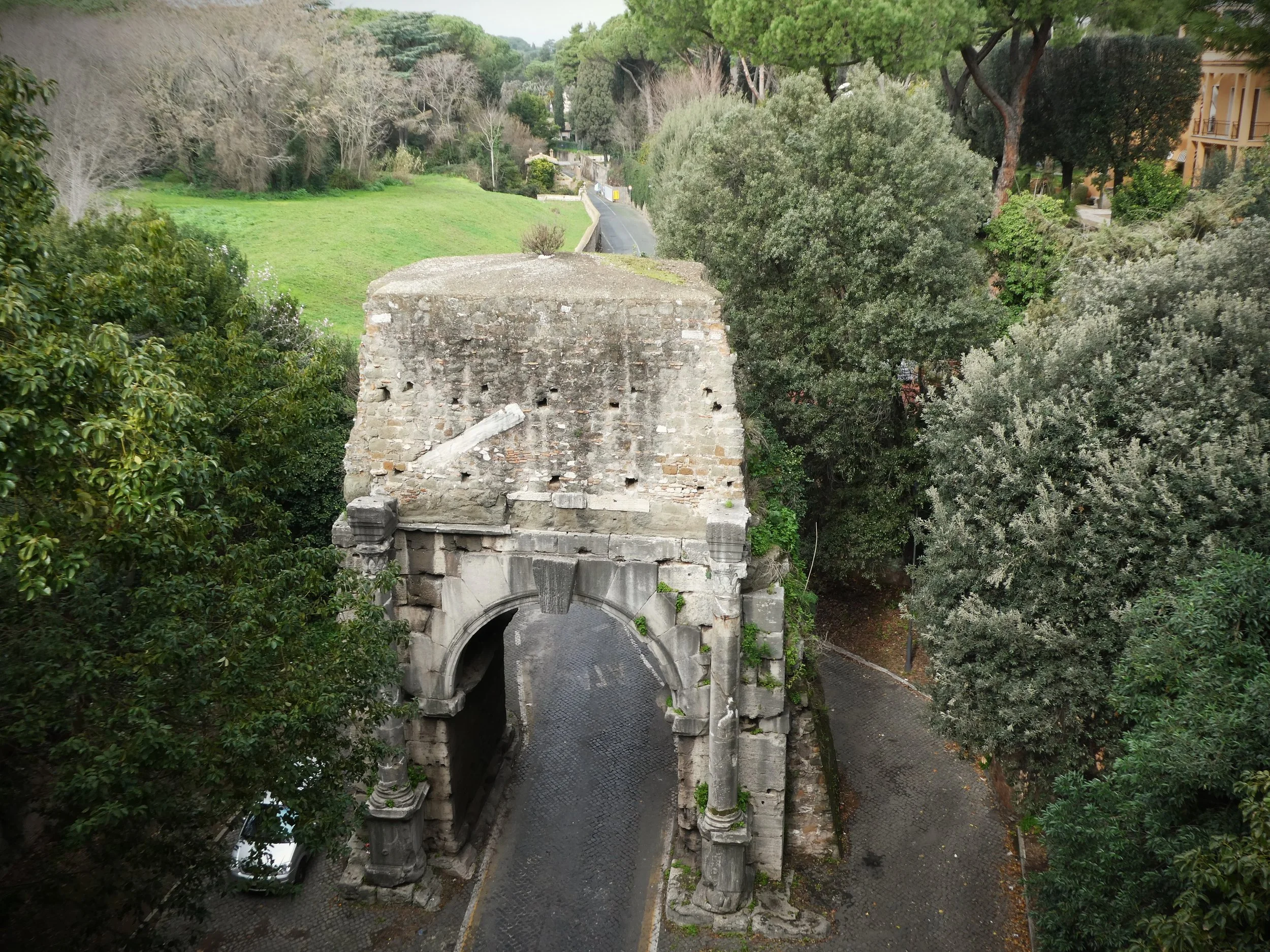
The Arch of Drusus
Past the arch, in the wall beneath Porta San Sebastiano’s right-hand tower, you’ll see a wooden door, and if it’s between 9 AM and 2 PM any day but Monday, you can walk right inside the tower. It’s free. Welcome to the Aurelian Walls and the Museo delle Mura!
The walls were named for the emperor who ordered them built, Aurelian. He became Emperor during what historians call the “Crisis of the Third Century,” after Emperor Severus Alexander was assassinated in 235 AD. Over the next five decades, more than 20 Roman generals declared themselves Emperor. In the confusion, Barbarian invaders took the opportunity to plunder and pillage. The walls, finished in 275 AD, helped save the Empire from an early death.
In truth, the rooms inside the museum aren’t the main draw here – you’ll see scale models of the walls, and floor mosaics from the 1940s, made for Ettore Muti, Secretary General of the Fascist party during the war. The gate was his residence during WWII; he didn’t have much time to enjoy it, though; his fate was eerily similar to many of the 3rd century generals – he was assassinated by his fellow fascists in 1943.
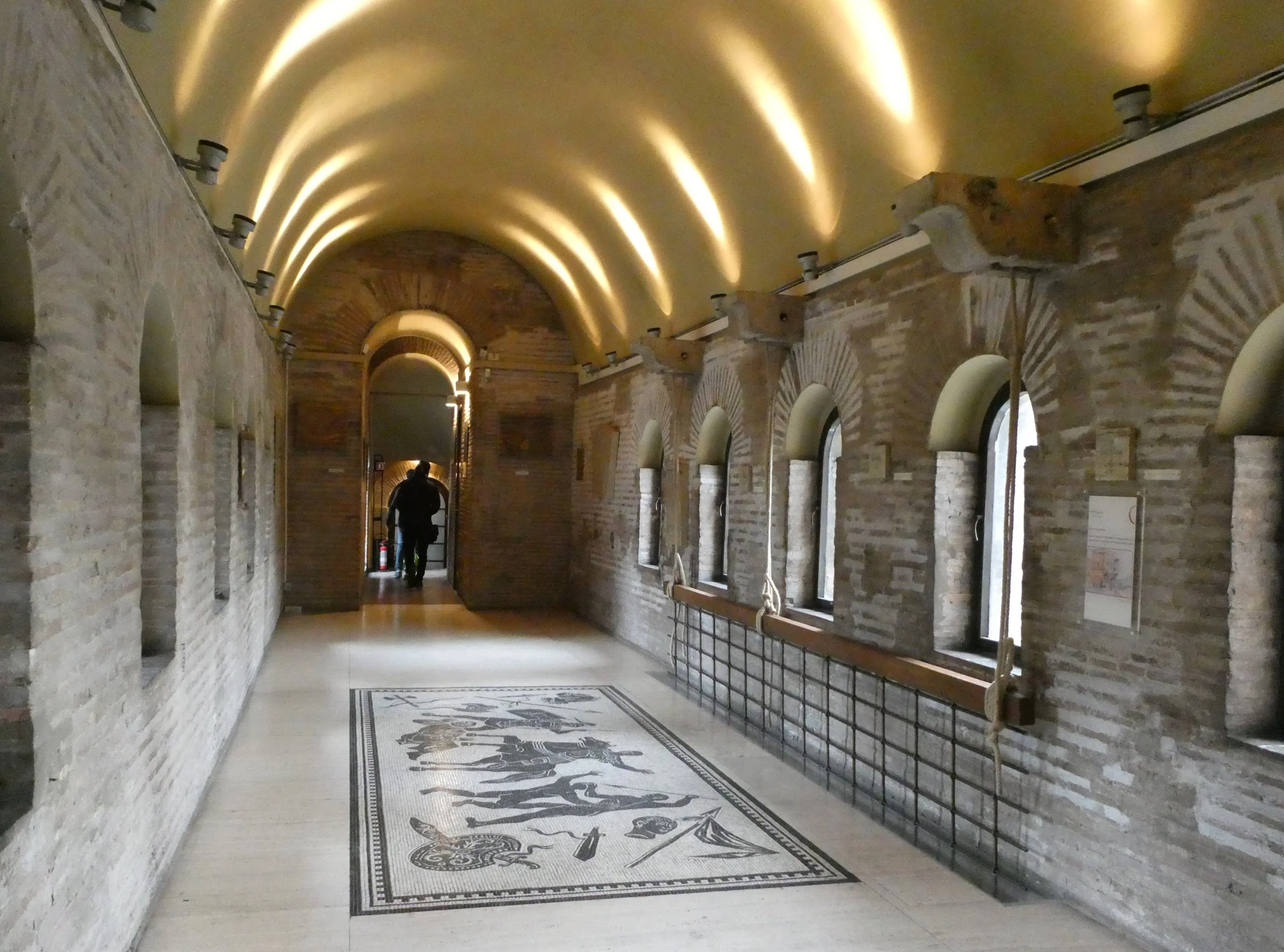
1940’s Floor Mosaics, in faux-antique style
What you really want to find is the staircase heading upward, because that will deposit you on a high terrace, between the two towers. Far below your feet the Via Appia heads southward, past the Domine Quo Vadis church and the Catacombs of St. Callistus and St. Sebastian, onward past the Circus of Maxentius, Cecilia Metella’s tomb, and a long stretch of original Roman road surface that once reached all the way to Brindisi.
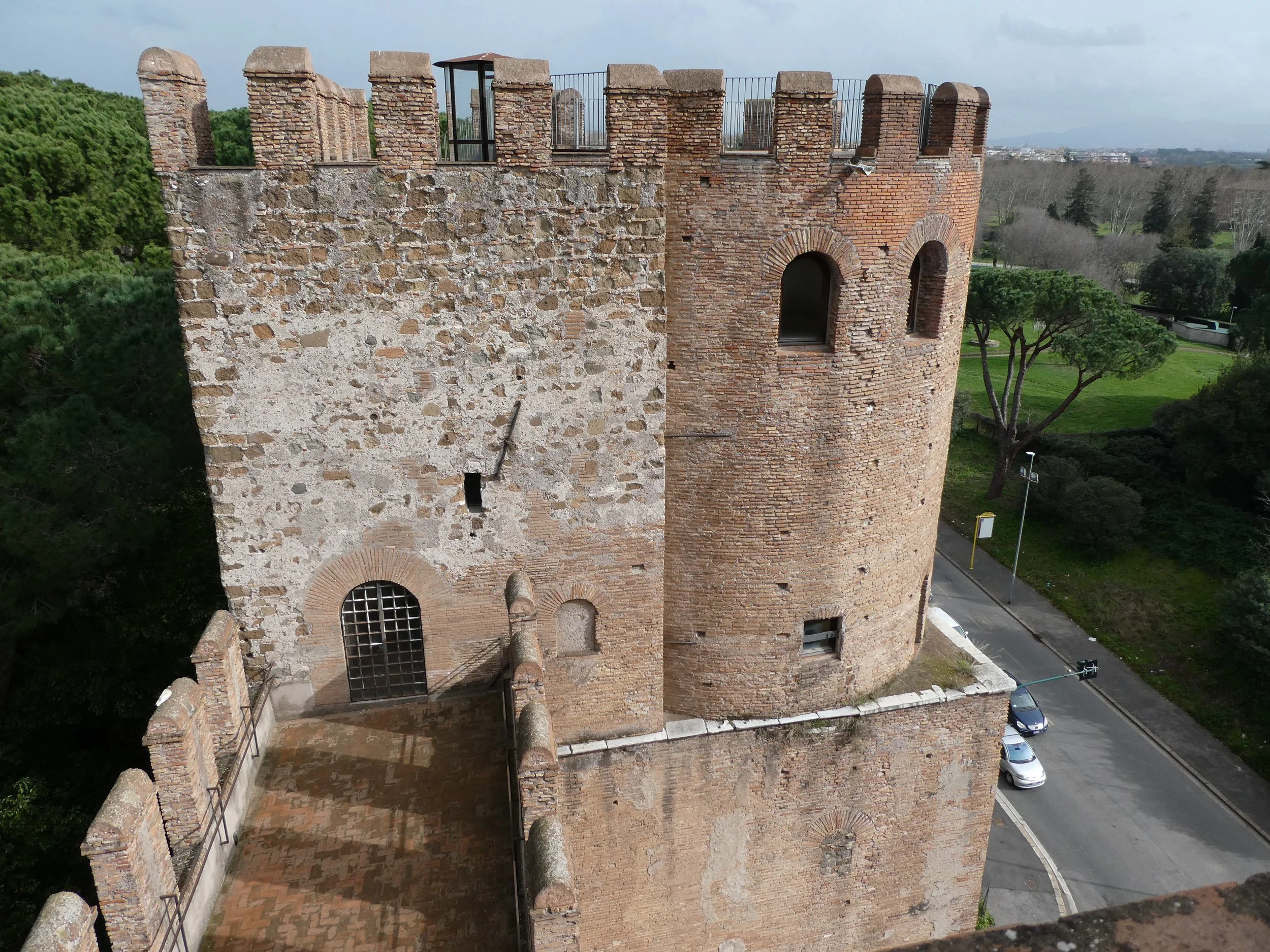
Porta San Sebastiano, West Tower seen from the East Tower
Back inside the tower, you’ll find stairs going further up, until finally, you can clamber up a spiral of narrow metal treads to the tower’s very top. Here, you’ll find yourself on a windy circular roof edged with crenelation like a castle keep, high above the streets and the trees, gazing at the ancient walls far below: 19 kilometres (12 miles) of brick-faced pozzolana concrete, 50 feet high in the old days, 11 feet thick, with 18 major gates and a watchtower every 100 Roman feet. 75% of the wall still stands today.
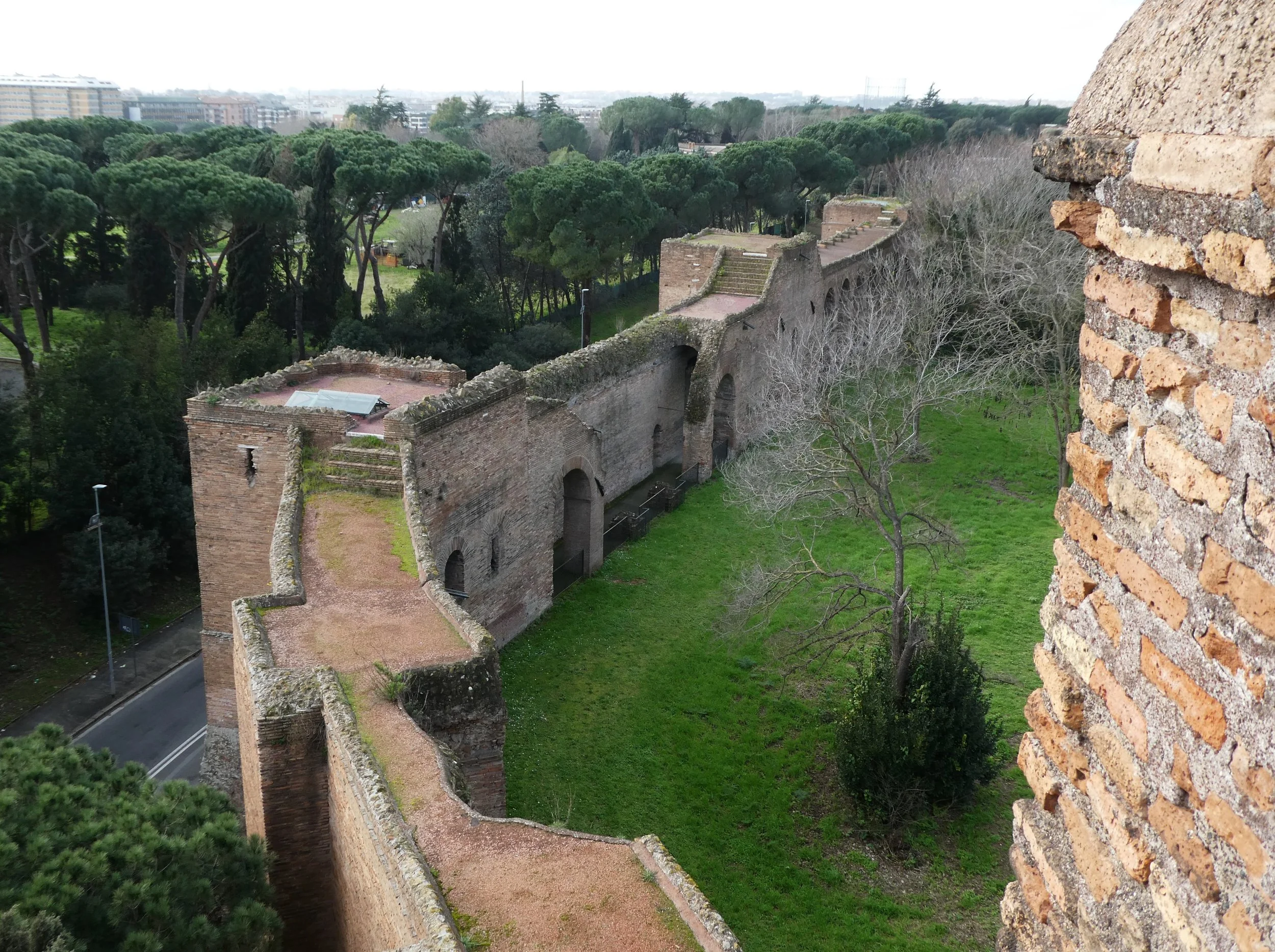
The Aurelian Walls, seen from the East Tower
You might wonder why Rome didn’t already have a defensive wall in place before the “Crisis.” Well, there was one – but it was much smaller, very old, and hadn’t been maintained for centuries. Built in the 4th century BC, it was named for the sixth king of Rome, Servius Tullius. It was breached in 390 BC, when the Roman army fought a large force of invading Gauls outside of town. The Gauls got the upper hand, and the Romans fled in disarray. Half of them sought shelter in nearby Veii, an Etruscan town; the other half raced back to Rome in a panic, and forgot to shut the gate after them, according to Livy. This led to the first Sack of Rome.
Nevertheless, the Roman Legions improved until they became the most feared military in the world. For five centuries or so, Romans scorned the need for city walls, and the Servian Wall crumbled; but you can see bits and pieces here and there in central Rome. For example, there’s a section of wall in Termini Station, inside the basement McDonald’s restaurant, and a bigger stretch in Piazza dei Cinquecento, adjacent to the station.
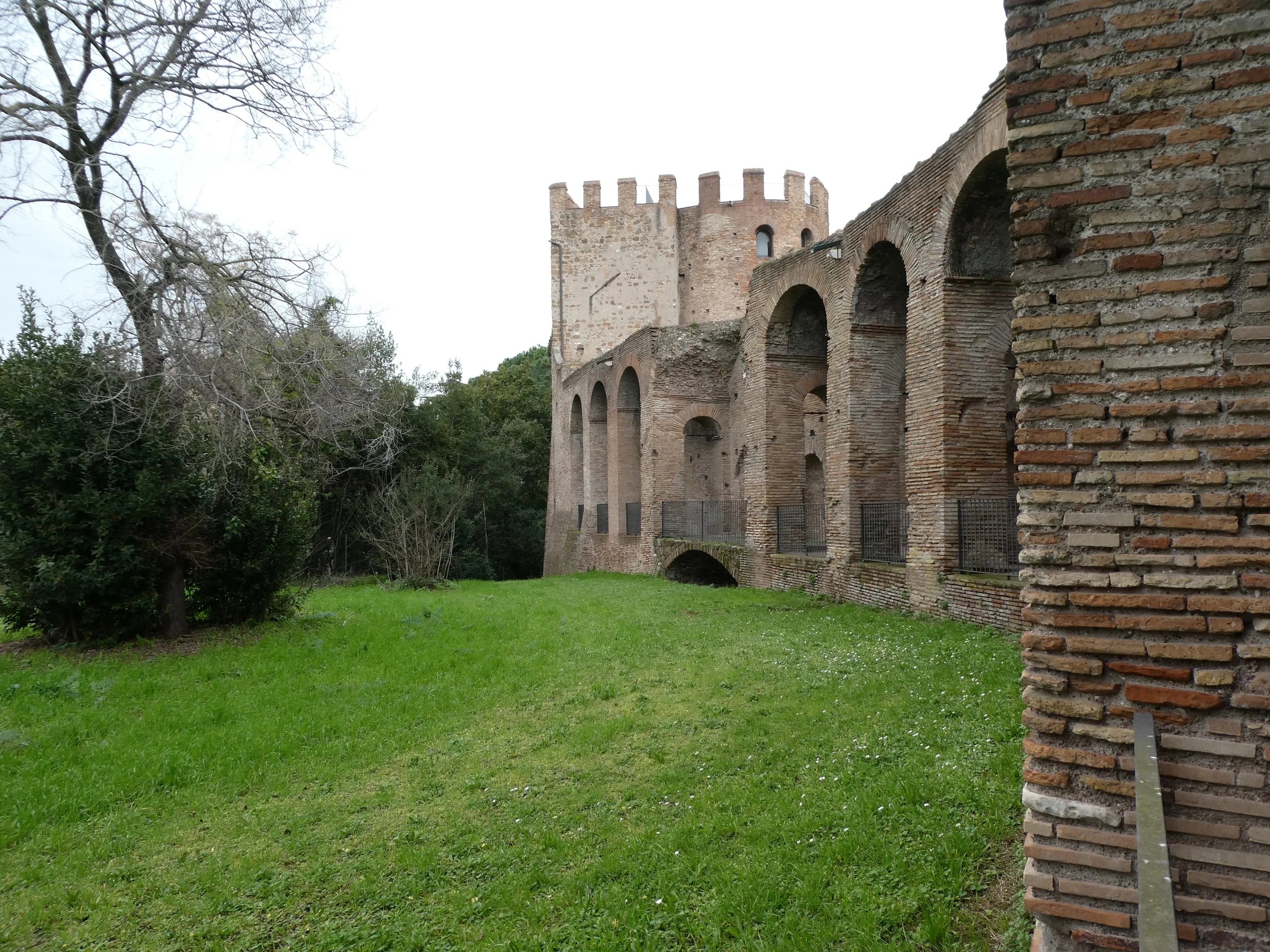
A Watchtower every 100 Roman Feet
Rome was sacked again eight centuries later, in 410 AD, and this time it was Visigoths who attacked. They entered the city through the Aurelian Walls when someone inside treacherously opened the Porta Salaria. They plundered the city for three days, and, among other loot, managed to steal Princess Galla Placidia, the emperor’s sister. She married the Visigoth chieftain Ataulphus four years later, and was furious when her brother ransomed her back. But that’s another story.
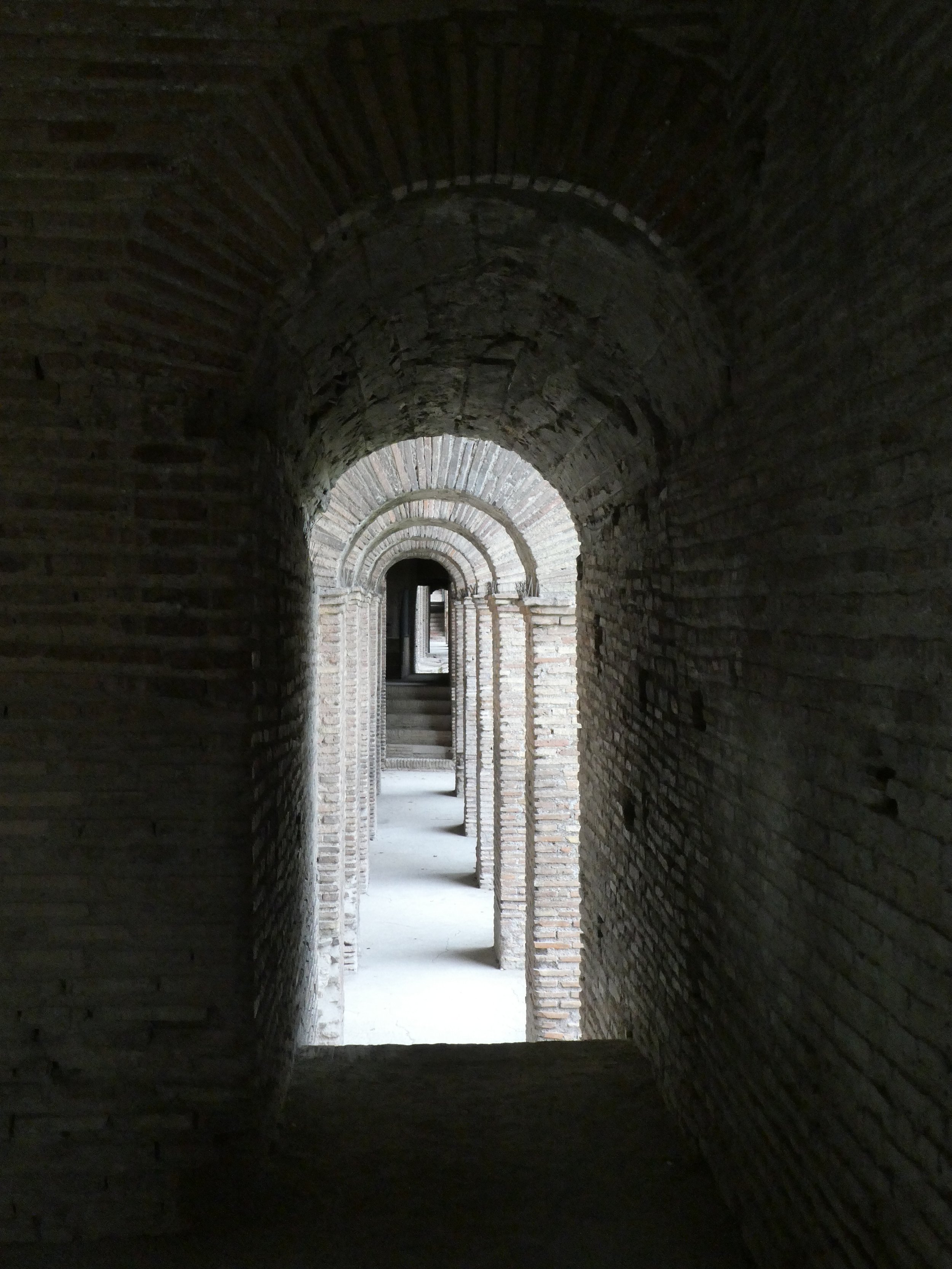
Walkway within the Walls
You can descend from the tower and take a stroll along the sentry’s walk inside the walls, keeping a sharp lookout for Goths and Vandals. No doubt you’ll consider how perilous those times were, as the Roman civilisation began its slow decline, and ask yourself that eternal question – why did the Roman Empire fall? You may remember that Rome was sacked again in 1527 by troops of Emperor Charles V, and if that leads to morose musings on our own perilous times, you can cheer yourself up by saying goodbye to the museum, passing through the gate, and heading along the ancient Appian Way to St. Sebastian’s catacombs.
© Text © 2025 by Joe Gartman; Photographs © 2025 by Patricia Gartman. First published in Italia! Magazine, February/March 2025